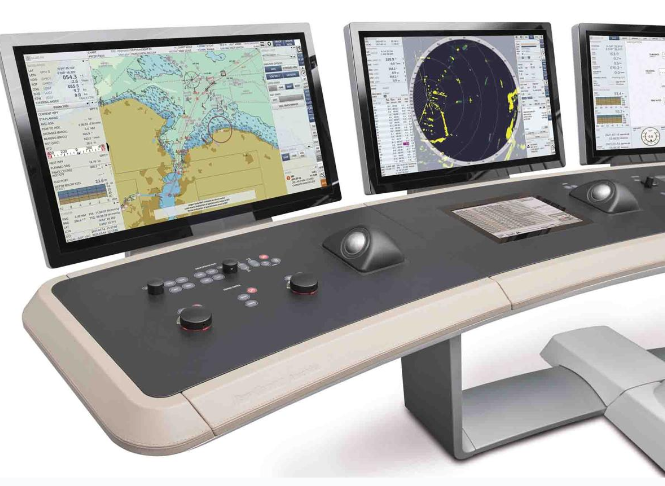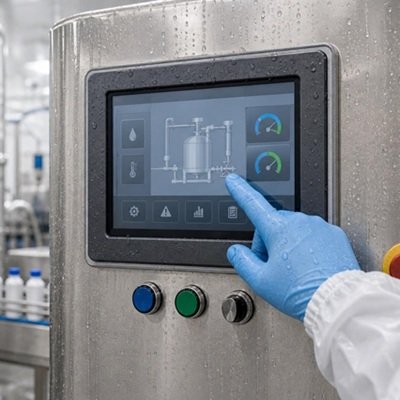
Se espera que las pantallas táctiles industriales funcionen de manera fiable en entornos donde las pantallas de consumo ordinarias pueden tener dificultades. La lluvia, la humedad, el polvo, las fluctuaciones de temperatura, las vibraciones y el contacto físico repetido pueden afectar el rendimiento y la vida útil de la pantalla táctil.
Para los fabricantes de equipos y los compradores OEM/ODM, elegir la pantalla táctil capacitiva impermeable adecuada requiere más que seleccionar un tamaño de pantalla o verificar si un producto admite funcionalidad multitáctil.
Una solución de pantalla táctil industrial fiable debe combinar una protección ambiental adecuada, materiales de sensor duraderos, rendimiento óptico, compatibilidad eléctrica y fiabilidad de los componentes a largo plazo.
Con más de 15 años de experiencia en I+D en tecnología TFT, OLED y táctil, Qihantech proporciona soluciones personalizadas de pantallas industriales y táctiles capacitivas para aplicaciones de hardware exigentes, incluidos equipos médicos, automatización industrial, aeroespacial y sistemas relacionados con la defensa.
Esta guía explica los factores técnicos que los gerentes de compras, ingenieros de producto y compradores OEM deben evaluar antes de seleccionar una pantalla táctil capacitiva proyectada (PCAP) impermeable.
1. Comprender la tecnología de pantallas táctiles capacitivas impermeables
Una pantalla táctil capacitiva proyectada detecta la entrada táctil midiendo los cambios en un campo eléctrico generado por electrodos conductores dentro del sensor táctil.
A diferencia de las pantallas táctiles resistivas tradicionales, la tecnología PCAP admite operación multitáctil, superficies de vidrio lisas e integración industrial flexible.
Sin embargo, el rendimiento impermeable depende tanto del diseño de la pantalla táctil como de la carcasa del equipo circundante.
Un sensor táctil capacitivo por sí solo no hace que un conjunto de pantalla completo sea impermeable.
Componentes clave de una Pantalla táctil capacitiva industrial
Un conjunto típico de pantalla táctil industrial puede incluir:
- Vidrio de cubierta: Protege el sensor subyacente contra rayones, impactos y exposición ambiental.
- Vidrio conductor ITO: Forma electrodos conductores transparentes utilizados para la detección táctil capacitiva.
- Pasta de plata conductora: Proporciona interconexiones eléctricas entre los electrodos del sensor y los circuitos asociados.
- Materiales de aislamiento: Aíslan eléctricamente los patrones conductores y ayudan a proteger la estructura del sensor.
- Controlador táctil: Procesa los cambios de capacitancia y los convierte en coordenadas táctiles.
- Pantalla TFT LCD u OLED: Proporciona la interfaz visual detrás del sensor táctil.
- Capa de unión óptica: Conecta el conjunto de pantalla y cubierta mientras reduce las reflexiones internas.
Para aplicaciones industriales impermeables, estos componentes deben funcionar como un sistema integrado.
2. IP65 vs. IP67 vs. IP68: Elegir la clasificación de impermeabilidad adecuada
Las clasificaciones de Protección de Ingreso (IP) están definidas por la IEC 60529 y describen el grado de protección proporcionado por una carcasa contra objetos sólidos y agua.
Para aplicaciones de pantallas táctiles industriales, se consideran frecuentemente IP65, IP67 e IP68.
| Clasificación IP | Características de protección | Aplicaciones típicas |
|---|---|---|
| IP65 | A prueba de polvo; protegido contra chorros de agua | Paneles de control de fábrica, kioscos exteriores |
| IP67 | A prueba de polvo; protegido contra inmersión temporal en condiciones de prueba especificadas | Dispositivos de monitoreo exterior, instrumentos portátiles |
| IP68 | A prueba de polvo; protegido contra inmersión en condiciones especificadas por el fabricante más allá de IPX7 | Equipos que requieren protección mejorada contra inmersión |
IP65 Pantallas táctiles capacitivas
Una carcasa de pantalla táctil con clasificación IP65 es comúnmente adecuada para equipos industriales expuestos a polvo, salpicaduras y chorros de agua.
Las aplicaciones típicas incluyen paneles de control de fabricación, terminales exteriores e instrumentación industrial.
Pantallas táctiles capacitivas IP67
La protección IP67 es relevante cuando el equipo puede experimentar inmersión temporal en agua.
Puede ser apropiada para instrumentos de medición industriales portátiles, sistemas de monitoreo de campo y dispositivos exteriores seleccionados.
Pantallas táctiles capacitivas IP68
IP68 está destinado a aplicaciones que requieren protección contra inmersión bajo condiciones de prueba específicamente acordadas.
La profundidad y duración reales deben confirmarse con el fabricante.
Consejo de compra para OEM: Confirme siempre si la clasificación IP se aplica al panel frontal, a la carcasa completa o al dispositivo completamente ensamblado. Una clasificación IP67 del panel frontal no significa automáticamente que todo el producto tenga clasificación IP67.
Además, una clasificación IP67 o IP68 no establece automáticamente el cumplimiento con las pruebas de chorro de agua IP65. Cuando ambas condiciones sean relevantes, solicite la evidencia de prueba aplicable.
3. Resistencia al impacto IK: Proteger las pantallas táctiles contra daños físicos
Las pantallas táctiles industriales pueden experimentar impactos mecánicos de herramientas, equipos, colisiones accidentales o manipulación repetida.
La clasificación IK, definida por la IEC 62262, indica el grado de protección que proporciona una carcasa contra impactos mecánicos externos.
| Clasificación IK | Energía de impacto | Consideraciones de aplicación |
|---|---|---|
| IK07 | 2 J | Exposición mecánica moderada |
| IK08 | 5 J | Paneles de operador industriales |
| IK09 | 10 J | Instalaciones industriales más exigentes |
| IK10 | 20 J | Entornos de acceso público y de alto impacto |
Selección Vidrio de cubierta para pantallas táctiles industriales
La selección del vidrio de cubierta debe considerar el espesor del vidrio, el proceso de fortalecimiento, el tratamiento de bordes, el diseño de montaje y el rendimiento requerido frente a impactos.
Las configuraciones de pantallas táctiles personalizables de Qihantech pueden desarrollarse en torno a los requisitos de vidrio de cubierta específicos del proyecto, incluyendo opciones de vidrio templado y vidrio químicamente fortalecido seleccionado.
La selección final del material debe reflejar el diseño mecánico de la aplicación y los requisitos de impacto validados.
Consideración de ingeniería: Un vidrio de cubierta más grueso puede mejorar la robustez mecánica, pero también puede afectar la sensibilidad táctil. El controlador, el diseño de electrodos y el firmware deben optimizarse para el conjunto completo del vidrio de cubierta.
4. Unión óptica vs. unión por aire: ¿Cuál es mejor para pantallas en exteriores?
La unión óptica es una consideración importante al seleccionar pantallas TFT LCD industriales para entornos exteriores o de alta humedad.
Dos enfoques de ensamblaje comunes son la unión por aire y la unión óptica completa.

Unión por aire: Vidrio de cubierta y pantalla separados por una cámara de aire.

Unión óptica completa: Un adhesivo ópticamente transparente rellena el espacio entre las capas de la pantalla.
Unión por aire
La unión por aire mantiene una separación entre el conjunto del vidrio de cubierta táctil y la pantalla.
Las ventajas incluyen un ensamblaje relativamente sencillo y costos de fabricación potencialmente menores.
Sin embargo, la cámara de aire introduce interfaces reflectantes adicionales y puede aumentar la probabilidad de condensación interna cuando entra humedad en el conjunto.
Unión óptica completa mediante LOCA u OCA
La unión óptica completa rellena el espacio entre la pantalla y el conjunto táctil con un material de unión ópticamente transparente.
Las tecnologías comunes incluyen:
- LOCA (Liquid Optically Clear Adhesive - Adhesivo líquido ópticamente transparente): Un adhesivo líquido que se dispensa y se cura durante la unión.
- OCA (Optically Clear Adhesive - Adhesivo ópticamente transparente): Una película adhesiva preformada que se aplica entre las capas ópticas.
- OCR (Optical Clear Resin - Resina ópticamente transparente): Un término más amplio que se utiliza a menudo para materiales de unión de resina ópticamente transparente, incluyendo ciertos sistemas líquidos.
Los beneficios pueden incluir reflexiones internas reducidas, mejor contraste percibido, menor riesgo de condensación interna y mejor integración mecánica.
| Comparación | Unión por aire | Unión óptica completa |
|---|---|---|
| Reflexiones internas | Mayor | Menor |
| Legibilidad en exteriores | Más dependiente de las condiciones ambientales | A menudo mejorado |
| Riesgo de condensación interna | Mayor si entra humedad en la cámara de aire | Reducido dentro de la interfaz unida |
| Complejidad de ensamblaje | Menor | Mayor |
| Costo de fabricación | Generalmente menor | Generalmente mayor |
| Idoneidad típica | Equipos industriales para interiores | Equipos industriales para exteriores y exigentes |
For outdoor instruments, full optical bonding is often the preferred engineering approach when readability and environmental durability are priorities.
Nevertheless, optical bonding does not replace enclosure sealing, gasket design, or IP testing.
5. Why Premium Touch Sensor Materials Matter for Long-Term Reliability
The reliability of an industrial capacitive touchscreen depends heavily on its conductive and insulating materials.
Poor material uniformity, unstable electrical resistance, and inadequate adhesion can contribute to touch sensitivity variation, signal instability, or premature failure.
Qihantech’s premium material specification approach emphasizes three critical elements: ITO conductive glass, conductive silver paste, and insulation materials.
High-Performance ITO Conductive Glass
Indium Tin Oxide (ITO) is widely used to create transparent conductive patterns for capacitive touch sensors.
Important quality indicators include sheet resistance uniformity, surface roughness, environmental stability, and adhesion performance.
Based on the supplied premium material specification comparison:
| Performance Index | Especificación premium | Comparación de referencia a nivel de mercado |
|---|---|---|
| Sheet resistance uniformity | ±1,5 Ω/sq máximo; varianza dentro del lote ≤0,8 Ω/sq | ±6–10 Ω/sq; hasta 10 Ω de desviación por hoja |
| Surface roughness (AFM-Ra) | 0,8–1,2 nm | 3,5–6 nm |
| 85°C/85% RH damp heat, 1,000 hours | Deriva de resistencia insignificante | Greater drift and potential touch failure risk |
| Film adhesion and abrasion, 1,000 cycles | ≤6% de cambio de resistencia | Mayor que 18% de cambio de resistencia |
Improved resistance uniformity can support consistent electrical behavior across the sensor surface, while a smoother conductive film may benefit subsequent coating and patterning processes.
For industrial OEM projects, these properties are especially relevant when consistent touch performance is required across multiple production batches.
Premium Conductive Silver Paste
Conductive silver paste forms electrical pathways between the touch sensor electrodes and the flexible circuit or other interconnection structures.
The supplied material comparison identifies premium ASAHI silver paste as a selected material option.
Its listed performance targets include:
- Damp heat aging resistance change of ≤10%.
- Cross-cut adhesion grade 5B under ASTM D3359.
- Low and stable ITO contact resistance after aging.
Stable conductivity and strong adhesion are important for reducing electrical discontinuities and long-term signal degradation.
High-Insulation Protective Materials
Insulation materials protect conductive patterns and reduce the risk of unwanted electrical leakage.
The supplied DEXERIALS premium insulation material comparison identifies the following targets:
| Performance Parameter | Especificación premium | Comparación de referencia a nivel de mercado |
|---|---|---|
| Volume resistivity | ≥10¹² Ω·cm | 10⁹–10¹⁰ Ω·cm |
| Step coverage | Recubrimiento conforme, sin poros | Greater risk of poor coverage |
| Pencil hardness | ≥3H | 1H–2H |
High volume resistivity and uniform insulation coverage can improve electrical isolation between conductive structures.
These characteristics are particularly important for industrial touchscreens exposed to high humidity and prolonged operating periods.
Technical data note: The premium and market-level figures above are reproduced from the supplied material comparison. They should be treated as supplier-provided specifications and reference comparisons, not independently verified industry-wide averages. The stated 30% conduction-resistance and 40% anti-interference improvements require defined test methods and supporting reports before publication as validated performance claims.
6. Operating Temperature and Humidity Requirements
Industrial displays are often deployed in environments with significant temperature variations.
For outdoor instrumentation and industrial control systems, a project operating temperature requirement of −30°C to +85°C may be appropriate.
However, the touchscreen sensor, display module, controller, adhesives, and other components must each be evaluated against the required conditions.
Low-Temperature Performance
Low temperatures can affect LCD response time, adhesive properties, and the behavior of electronic components.
Applications operating below freezing may require specially selected liquid crystal materials, display heaters, or thermal management solutions.
High-Temperature Performance
Elevated temperatures can affect LCD lifetime, OLED aging, adhesive stability, and controller reliability.
Temperature qualification should therefore cover the complete touchscreen display assembly rather than individual components alone.
High-Humidity Environments
High humidity can contribute to corrosion, electrical leakage, and deterioration of sensitive interfaces.
For industrial touchscreen qualification, engineers may consider damp heat testing, temperature cycling, insulation resistance testing, and functional verification after environmental exposure.
An 85°C/85% RH test is a useful accelerated reliability assessment, but passing a particular duration does not independently establish a specific outdoor service life.
7. Sunlight-Readable Industrial Displays: Brightness, AG, AR, and AF Coatings
Outdoor touchscreen readability depends on more than LCD brightness.
Ambient light reflection, cover glass treatment, display contrast, and optical bonding all influence the operator’s ability to read the screen.


High-Brightness TFT LCD Displays
For outdoor applications, display brightness requirements may range from approximately 800 to 1,500 nits or higher, depending on ambient illumination and optical design.
The appropriate brightness should be selected using actual application conditions rather than a fixed universal threshold.
Anti-Glare (AG) Coating
AG treatments diffuse reflected light, helping reduce distracting glare.
However, excessive surface haze can reduce perceived image sharpness, so the AG specification should be balanced against display resolution and optical clarity.
Anti-Reflection (AR) Coating
AR coatings reduce reflections at optical surfaces, improving perceived contrast under strong ambient light.
AR coatings are especially useful when combined with full optical bonding.
Anti-Fingerprint (AF) Coating
AF coatings help reduce fingerprint visibility and make the cover glass easier to clean.
This is valuable for frequently operated industrial control panels and public-facing equipment.
For outdoor OEM projects, Qihantech can support evaluation of AG, AR, and AF surface treatments according to application-specific requirements.
8. Waterproof Touchscreens With Gloves and Wet-Finger Operation
Industrial operators may need to use touchscreen interfaces while wearing gloves or working in wet conditions.
These operating scenarios create additional challenges for projected capacitive touch technology.
Water droplets can alter the local capacitive field, potentially causing false touch detection or reduced touch sensitivity.
Gloves can also reduce the coupling between the operator’s finger and the sensor.
Optimizing Wet-Touch Performance
Water-tolerant PCAP touchscreen designs may require optimized electrode patterns, controller algorithms, noise filtering, and firmware tuning.
Glove Touch Functionality
Glove operation depends on several factors, including glove thickness, glove material, cover glass thickness, and controller sensitivity.
For equipment manufacturers, the most reliable approach is to validate touch operation using the actual gloves and environmental conditions expected in the field.
10-Point Multi-Touch Support
Qihantech’s customizable PCAP touch solutions can be specified for 10-point multi-touch operation where the selected sensor and controller support it.
This functionality is useful for industrial HMI applications requiring multi-finger gestures, zooming, or more complex graphical interfaces.
OEM Validation Tip: Request touch accuracy, false-touch rejection, wet-finger performance, and glove-operation tests using the final mechanical assembly.
9. Choosing the Right Touchscreen Interface: USB, I²C, or RS232
Interface compatibility is an important consideration when integrating a capacitive touchscreen into an industrial device.
| Interfaz | Key Characteristics | Aplicaciones típicas |
|---|---|---|
| USB | Common host interface; convenient integration with supported operating systems | Industrial PCs, kiosks, embedded computers |
| I²C | Compact serial interface suitable for embedded integration | Custom control boards, embedded HMI systems |
| RS232 | Serial communication option requiring compatible controller and protocol support | Legacy industrial equipment, specialized control systems |
USB Capacitive Touch Panels
USB touchscreen interfaces are commonly used with industrial PCs and embedded systems.
They can simplify integration where suitable drivers and standard touch input support are available.
I²C PCAP Touchscreens
I²C is frequently used in compact embedded devices where the touch controller communicates directly with the main processor.
RS232 Touchscreen Solutions
RS232 may be relevant for legacy equipment or specialized industrial control architectures.
Because modern PCAP controllers do not universally provide native RS232 output, interface availability should be confirmed during the design stage.
Qihantech supports OEM touchscreen interface customization based on controller selection, host compatibility, and project requirements.
10. Custom Capacitive Touchscreen Design for OEM/ODM Manufacturers
Standard touchscreen modules are not always suitable for specialized industrial equipment.
OEM buyers may require non-standard dimensions, customized glass outlines, special mounting structures, or unique electrical interfaces.
Qihantech provides industrial touchscreen and display customization services for integration into customer-specific hardware.
Available Customization Considerations

Custom Cover Glass and Sensor Layouts
Application-specific glass dimensions, cover lens outlines, printed borders, sensor patterns, and mechanical mounting requirements.

Custom Interface and FPC Design
Flexible printed circuit layouts, connector positioning, touch controller selection, and host interface integration.

Integrated TFT LCD and Touch Assemblies
Touchscreen integration with selected industrial TFT LCD or OLED modules, including optical bonding and surface treatment options.
Custom PCAP touch overlays and semi-finished touchscreen assemblies can also support OEM customers that perform final mechanical integration in their own production facilities.
11. Typical Applications for Waterproof Industrial Touchscreens

Automatización Industrial
Factory control panels, machinery interfaces, and production monitoring terminals.

Outdoor Measurement Instruments
Portable electrical testers, environmental monitors, and field inspection equipment.

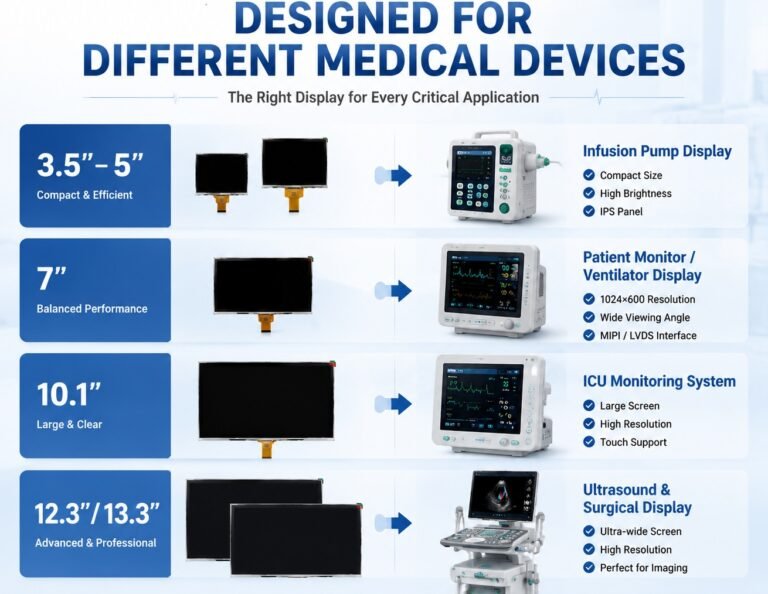
Medical Equipment
Diagnostic systems, medical instrumentation, and frequently cleaned operator interfaces.

Aerospace and Specialized Equipment
Rugged display interfaces designed around demanding environmental and integration requirements.
Each industry may require additional qualification beyond basic touchscreen functionality.
For example, medical equipment may require evaluation against applicable IEC 60601 standards, while aerospace and defense-related applications may involve project-specific environmental, electromagnetic compatibility, and reliability requirements.
Material selection alone does not establish compliance with these industry standards.
12. B2B Purchasing Checklist: How to Evaluate an Industrial Touchscreen Manufacturer
Before placing a bulk order, procurement managers should request sufficient engineering information to verify the supplier’s suitability.
| Evaluation Category | Questions to Ask the Manufacturer |
|---|---|
| Environmental protection | Is the IP rating verified for the final assembly? |
| Mechanical strength | What impact tests and cover glass options are available? |
| Display readability | What are the brightness, reflectance, and optical bonding specifications? |
| Touch performance | Does the design support wet touch, gloves, and required multi-touch operation? |
| Temperature range | Are the complete module’s operating and storage ranges documented? |
| Sensor materials | Are ITO resistance uniformity and insulation performance controlled? |
| Electrical interface | Are USB, I²C, or other required interfaces supported? |
| Quality assurance | Are environmental and production test reports available? |
| Customization | Can the supplier modify the cover glass, FPC, and display assembly? |
| Long-term supply | What are the component lifecycle, change-notification, and replacement policies? |
Request Samples Before Mass Production
For high-reliability applications, buyers should evaluate engineering samples in the final equipment configuration.
A practical qualification program may include environmental exposure, optical inspection, electrical performance measurement, mechanical testing, and functional touch testing.
Documenting acceptance criteria before testing helps reduce disagreements and costly design changes during production.
13. Why Choose Qihantech for Industrial Touchscreen OEM/ODM Projects?
Qihantech specializes in industrial TFT LCD displays, OLED displays, and capacitive touchscreen solutions, supported by more than 15 years of R&D experience in display and touch technologies.
Our OEM/ODM approach focuses on aligning the display and touchscreen design with each customer’s electrical, mechanical, optical, and environmental requirements.
Key areas of customization include premium touch sensor material selection, custom PCAP sensor layouts, cover glass specifications, AG/AR/AF surface treatments, touch controller integration, and display bonding configurations.
For industrial equipment manufacturers, this integrated approach helps simplify product development and supports more consistent touchscreen integration across the equipment lifecycle.
Whether you are developing an outdoor measurement instrument, industrial control panel, medical device, or specialized rugged display system, Qihantech can help evaluate a touchscreen configuration suited to your application.
Frequently Asked Questions About Waterproof Capacitive Touchscreens
1. What is the difference between IP65 and IP67 capacitive touchscreens?
IP65 indicates protection against dust ingress and water jets, while IP67 includes protection against temporary immersion under specified test conditions. The correct rating depends on the equipment’s exposure conditions and final enclosure design.
2. Can a capacitive touchscreen work with wet fingers or gloves?
Yes. Properly engineered PCAP touchscreens can support wet-finger and glove operation. Performance depends on the sensor design, touch controller, firmware, cover glass, and operating conditions.
3. Is optical bonding necessary for outdoor industrial displays?
Optical bonding is not mandatory for every outdoor display, but it can significantly improve optical performance by reducing internal reflections. It also eliminates the air gap between bonded layers, reducing the opportunity for condensation at that interface.
4. What brightness is recommended for an outdoor TFT LCD touchscreen?
Outdoor displays commonly require higher brightness than indoor modules. Depending on ambient illumination and optical construction, specifications of approximately 800–1,500 nits or higher may be considered. Final selection should be based on sunlight readability testing.
5. Can industrial capacitive touchscreens operate from −30°C to +85°C?
Some specially designed industrial touchscreen assemblies can be engineered for this range. However, the TFT LCD or OLED module, controller, adhesives, and associated components must all be qualified for the required operating conditions.
6. What makes premium ITO conductive glass important?
ITO sheet resistance uniformity, surface quality, adhesion, and environmental stability influence touch sensor consistency and long-term electrical performance. These characteristics are important for industrial equipment requiring reliable touch operation.
7. Can Qihantech customize waterproof capacitive touchscreens for OEM projects?
Qihantech offers OEM/ODM touchscreen customization covering sensor dimensions, cover glass, interfaces, surface treatments, and integration with industrial display modules. Waterproof performance requirements should be defined and validated for each final product design.
8. What information should buyers provide when requesting a custom industrial touchscreen?
Buyers should provide the required display size, resolution, cover glass dimensions, interface type, operating temperature, IP and IK requirements, touch functionality, optical bonding preference, and expected order quantities.
Conclusion: Select Industrial Touchscreens Based on Total System Reliability
Choosing a waterproof capacitive touchscreen for outdoor or industrial equipment requires a system-level engineering approach.
IP and IK ratings, premium sensor materials, optical bonding, display brightness, environmental resistance, and touch controller compatibility all contribute to the final product’s performance.
For OEM/ODM buyers, the best touchscreen solution is not necessarily the one with the highest individual specification. It is the solution that satisfies the equipment’s actual operating requirements, qualification criteria, and long-term supply needs.
With over 15 years of experience in TFT LCD, OLED, and touch technology, Qihantech supports industrial equipment manufacturers with customized touchscreen and display solutions designed for demanding applications.
Looking for a custom waterproof capacitive touchscreen or industrial TFT LCD display?
Contact Qihantech to discuss your project specifications, display integration requirements, and OEM/ODM customization options.