
For server and network equipment manufacturers, selecting an LCD module is not simply a component purchasing decision. It is also a long-term engineering and supply chain commitment.
Rack-mounted servers, industrial network switches, routers, firewalls, and embedded monitoring controllers may remain in production or service for many years.
During that time, the original equipment manufacturer (OEM) must maintain product quality, spare parts availability, and compatibility between production batches.
However, LCD modules contain components that may change or become discontinued during the equipment lifecycle.
A display that becomes unavailable unexpectedly can force manufacturers to modify PCBs, update firmware, change connectors, and repeat qualification testing.
This is why long-lifecycle industrial LCD supply is an important consideration for server and network equipment OEMs.
This guide explains the risks of LCD end-of-life, the importance of 5–10 year supply planning, and how working with an industrial display manufacturer such as QIHAN can help reduce sourcing and redesign risks.
1. Why Server and Network Equipment Need Long-Lifecycle Displays
Many industrial and enterprise network products are designed to operate for extended periods.
A server platform may undergo hardware revisions while retaining a similar enclosure and maintenance interface.
Network equipment manufacturers may also need replacement LCD modules for installed devices after the initial production phase.
For OEMs, display continuity helps support:
- Long-term equipment production
- Consistent mechanical design
- Stable electrical interfaces
- Compatibilidad del firmware
- Replacement part availability
- Maintenance and service planning
- Predictable procurement costs
Unlike rapidly changing consumer devices, many industrial systems prioritize stability and compatibility over frequent component upgrades.
LCD Modules Are Part of the Equipment Architecture
A display module is connected to several other parts of the system.
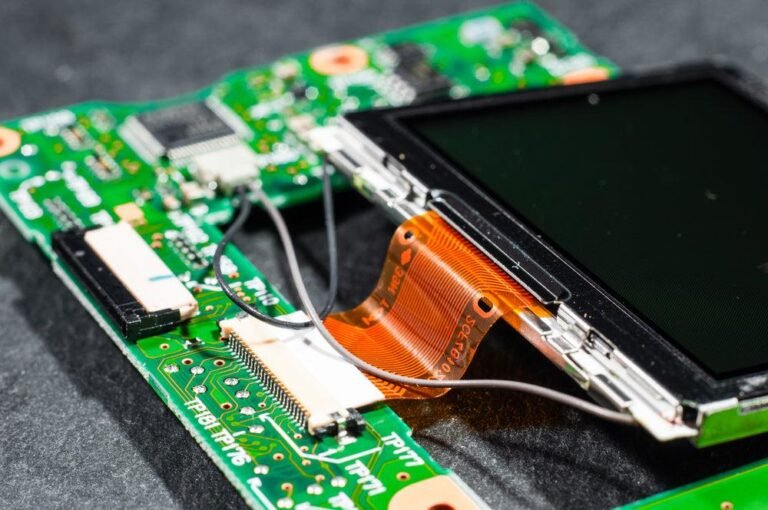
Its dimensions influence the enclosure design, while its interface and driver IC affect the controller electronics and firmware.
Its backlight requires a compatible power supply, and its FPC connector must match the PCB.
Therefore, replacing an LCD is not always as simple as purchasing another screen with the same diagonal size.
For long-term OEM projects, the LCD module should be treated as a controlled part of the product architecture.
2. What Happens When an Industrial LCD Reaches End of Life?
LCD end-of-life (EOL) occurs when a manufacturer discontinues a product or an essential component becomes unavailable.
Several factors can trigger an EOL event.
LCD Panel Discontinuation
The original glass panel or display assembly may be discontinued because of manufacturing changes or shifts in market demand.
Driver IC Obsolescence
A display controller IC may reach end-of-life even when the panel itself remains technically usable.
Replacing the driver may require firmware changes or a revised interface design.
Backlight Component Changes
LED backlight components can change due to supplier availability, efficiency improvements, or production updates.
A replacement backlight may affect brightness, power consumption, color characteristics, or mechanical design.
Connector and FPC Changes
Connectors, flexible printed circuits, and other components may also become unavailable.
Even a small change in connector position or pin assignment can require PCB modifications.
How EOL Affects OEM Production
| LCD Change | Potential OEM Impact |
|---|---|
| Panel discontinued | Replacement display qualification |
| Driver IC changed | Firmware or timing changes |
| Connector changed | PCB redesign |
| FPC dimensions changed | Mechanical integration changes |
| Backlight replaced | Brightness and power validation |
| Touch controller changed | Touch firmware and EMC testing |
These changes can increase engineering costs and interrupt production schedules.
A long-term supply strategy aims to make such transitions manageable rather than unexpected.
3. The Hidden Cost of Switching LCD Suppliers
The purchase price of an LCD module is only one part of its total cost.
When a manufacturer changes display modules, additional expenses may arise.
Hardware Redesign
A replacement LCD may require changes to the main PCB, connector position, power circuitry, or mounting structure.
Firmware Development
Different display controllers may require new initialization commands, timing configurations, or graphics drivers.
Mechanical Modifications
Changes in module thickness, active area, or outline dimensions may affect the front-panel enclosure.
Product Revalidation
A replacement display may require new testing for temperature operation, EMC, power consumption, display quality, and reliability.
Manufacturing Updates
New display specifications may require revisions to assembly instructions, inspection procedures, spare parts documentation, and production bills of materials.
Costo Total de Propiedad
A practical way to evaluate display sourcing is:
Total Display Ownership Cost = Component Cost + Integration Cost + Validation Cost + Lifecycle Maintenance Cost
A lower-priced LCD may not provide the best overall value if it introduces frequent redesign or replacement risks.
For server and network equipment OEMs, predictable availability can be more valuable than a small initial component price difference.
4. What Does 5–10 Year LCD Supply Planning Actually Mean?
A 5–10 year supply plan is more than a statement that the same display will always remain available.
It involves coordinating component sourcing, technical specifications, customer demand, and change management throughout the product lifecycle.
Stable Product Specifications
The supplier and OEM should agree on important specifications, including:
- Dimensiones del módulo
- Active display area
- Resolución
- Interfaz de visualización
- Driver IC requirements
- FPC and connector design
- Brightness and backlight characteristics
- Temperatura de funcionamiento
- Touchscreen configuration
Maintaining these specifications helps preserve compatibility across manufacturing batches.
Component Lifecycle Monitoring
The display supplier should monitor the availability of critical materials.
When an upstream component approaches discontinuation, the OEM may need time to evaluate replacement options.
Product Change Notification
A Product Change Notice (PCN) communicates relevant changes to materials, design, manufacturing, or other characteristics.
For long-term OEM programs, clearly defined change notification procedures help customers assess whether requalification is required.
End-of-Life Planning
When an LCD or critical component reaches EOL, the supplier and OEM may evaluate:
- Last-time-buy opportunities
- Spare parts inventory
- Replacement modules
- Form-fit-function compatibility
- Future redesign requirements
The appropriate response depends on remaining demand, available inventory, and the equipment’s expected service life.
A 5–10 year supply strategy should focus on continuity and controlled change, rather than assuming every upstream component will remain unchanged.
5. How to Evaluate a Long-Term Industrial LCD Supplier
Selecting an LCD manufacturer for a multi-year program requires more than comparing quotations.
Procurement teams should assess manufacturing capabilities, engineering support, lifecycle management, and communication procedures.
OEM/ODM Customization Capability
A supplier that supports display customization may be better positioned to help customers manage mechanical or electrical changes.
For example, a customized FPC or interface board may allow an OEM to integrate a compatible replacement LCD without redesigning the entire equipment platform.
Engineering Support
Display selection often involves coordination between purchasing, embedded software, electronics, and mechanical engineering teams.
A suitable supplier should be able to discuss technical specifications and integration requirements.
Supply Chain Planning
Long-term projects benefit from realistic demand forecasts.
The supplier and customer should establish expected production volumes, purchasing schedules, and relevant inventory arrangements.
Replacement Compatibility
When an original module becomes unavailable, a replacement should be evaluated according to mechanical, electrical, optical, and software compatibility.
A display with the same size and resolution is not automatically interchangeable.
Quality Consistency
Industrial OEMs should define clear inspection criteria and acceptance requirements.
These may include brightness, appearance, functional performance, interface reliability, and environmental testing.
6. Why Long-Lifecycle LCD Supply Matters for Different Network Equipment
Rack-Mounted Servers
Server manufacturers may need consistent front-panel displays across production batches and replacement units.
Changes in display dimensions or interfaces can affect chassis assembly and maintenance procedures.
Network Switches
Managed switches may include small LCDs for network status or local diagnostics.
A stable display platform can help maintain firmware compatibility and front-panel design consistency.
Routers and Firewalls
Network appliances often use compact embedded interfaces.
A replacement LCD may require firmware updates or mechanical adjustments, making supply continuity important.
Rack Monitoring Controllers
Power distribution and environmental monitoring devices may remain in service for extended periods.
Long-term display availability can support maintenance and spare parts planning.
For all these applications, selecting a suitable LCD early reduces the likelihood of costly changes later.
7. QIHAN’s 5–10 Year Industrial LCD Supply Support
QIHAN is a manufacturer of small and medium-sized industrial TFT LCD, LCD, OLED, and touchscreen modules, providing OEM/ODM customization and long-term supply support for embedded equipment manufacturers.
QIHAN works with industrial OEM customers to evaluate display requirements for equipment that may remain in production or service for many years.
5–10 Year Supply Planning
QIHAN supports industrial LCD programs targeting a 5–10 year supply lifecycle, helping manufacturers plan component sourcing and long-term production.
Project-specific commitments depend on the selected display, component availability, forecast demand, and agreed supply arrangements.
Custom FPC and Connector Solutions
When a standard module does not match the customer’s PCB or enclosure, QIHAN can evaluate custom FPC and connector configurations.
This flexibility can support integration and help manage compatibility requirements.
Interface and Hardware Integration
QIHAN supports display interface customization and related engineering discussions.
Depending on the selected module, integration options may involve SPI, MCU, RGB, LVDS, MIPI, or suitable controller-board solutions.
Custom Display Specifications
OEM/ODM options include:
- Tamaño y resolución de pantalla
- Dimensiones del módulo
- Brillo
- Viewing-angle requirements
- Configuraciones de placas de circuito flexible (FPC) y conectores
- Integración de la pantalla táctil
- Mechanical design requirements
Prototype and Production Support
QIHAN can support project discussions from initial specification evaluation through sample validation and production planning.
For long-term OEM customers, establishing a controlled technical specification early helps maintain consistency throughout the project lifecycle.
8. Procurement Checklist for a 5–10 Year LCD Project
Before selecting an industrial LCD supplier, OEM procurement teams should review the following items.
| Evaluation Item | Key Question |
|---|---|
| Product lifecycle | How long must the equipment remain in production? |
| Service requirements | How long will replacement parts be needed? |
| LCD specifications | Which characteristics must remain compatible? |
| Annual demand | What are the expected purchasing volumes? |
| Component sourcing | Are critical display components available long term? |
| PCN procedure | How will important changes be communicated? |
| EOL planning | What options exist if the module is discontinued? |
| Replacement strategy | Can a compatible alternative be qualified? |
| Engineering support | Can the supplier assist with interface or mechanical changes? |
| Quality control | What validation and inspection requirements apply? |
For projects with multi-year production schedules, these questions should be addressed before finalizing the display design.
9. Frequently Asked Questions
What is a long-lifecycle industrial LCD?
A long-lifecycle industrial LCD is a display selected and managed for extended OEM production or service requirements.
Its availability strategy may include component monitoring, supply planning, change notifications, and compatible replacement options.
Can an LCD manufacturer guarantee 10 years of supply?
A supplier may offer project-specific long-term supply commitments, but feasibility depends on component availability, production volumes, forecasting, and contractual conditions.
A documented supply agreement is more meaningful than a general statement of availability.
What is the difference between PCN and EOL?
PCN stands for Product Change Notice and communicates relevant changes to a product or manufacturing process.
EOL stands for End of Life and indicates that a product or component is being discontinued.
EOL announcements may include last-time-buy and final delivery information.
Can a discontinued LCD be replaced without redesigning the PCB?
Sometimes. A form-fit-function compatible replacement may reduce redesign requirements.
However, the replacement must be evaluated for dimensions, pinout, interface timing, power, optical characteristics, and firmware compatibility.
How does QIHAN support long-term OEM display projects?
QIHAN provides industrial LCD customization, engineering integration support, and 5–10 year supply planning for qualifying projects.
Specific arrangements should be established according to the customer’s technical and purchasing requirements.
Why is long-term LCD availability important for server OEMs?
Server manufacturers may need compatible modules for ongoing production, product revisions, and maintenance.
Stable display sourcing can reduce unexpected redesigns and support more predictable manufacturing operations.
Conclusión
Long-term LCD supply is an important consideration for manufacturers of servers, network switches, routers, firewalls, and embedded monitoring equipment.
Unexpected display discontinuation can affect PCB design, firmware compatibility, mechanical structures, product testing, and spare parts availability.
For OEM manufacturers, the most effective strategy is to select a suitable display platform early and establish clear lifecycle management procedures with the supplier.
QIHAN combines industrial LCD customization, hardware integration support, and 5–10 year supply planning to help server and network equipment manufacturers manage long-term display requirements.
By focusing on product compatibility and supply continuity, OEMs can reduce redesign risks and improve production planning.
¿Buscas una pantalla LCD compacta para el panel frontal de tu servidor?
QIHAN ofrece módulos LCD industriales de pequeño formato personalizables para servidores montados en rack, conmutadores de red y equipos de control integrados.
With OEM/ODM customization, flexible interface integration, and 5–10 year supply planning, QIHAN helps equipment manufacturers address both immediate development requirements and long-term production needs.
Contact QIHAN to discuss your LCD specifications, annual demand, and long-term supply requirements.
Sitio web: https://qihantech.com/
Lecturas relacionadas: Guía de selección de pantallas LCD para servidores y equipos de red
 English
 Português
 Français
 Deutsch
 Español
 Русский