
Medical touchscreens are exposed to more than fingerprints and everyday wear. In hospitals, clinics, and diagnostic laboratories, equipment surfaces may undergo repeated cleaning and disinfection using alcohol-based products, hydrogen peroxide formulations, and other approved healthcare disinfectants.
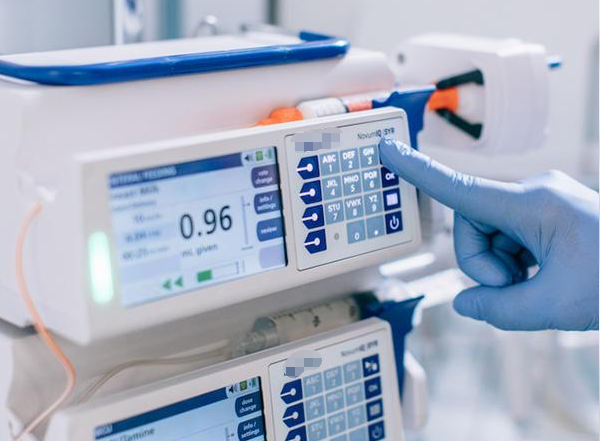
From patient monitors and infusion pumps to medical diagnostic analyzers, touchscreen cover glass must maintain optical clarity, surface integrity, and touch functionality throughout the equipment’s intended service life.
However, disinfection-resistant touchscreen design is not simply about choosing harder glass.
The complete front assembly—including the glass substrate, anti-glare (AG) treatment, anti-reflective (AR) coating, anti-fingerprint (AF) coating, decorative printing, optical adhesive, and enclosure seals—must withstand the intended cleaning process.
For medical device OEMs, this creates an important engineering challenge: how can a touch module provide excellent screen readability, scratch resistance, and cleaning durability without compromising long-term reliability?
This guide explains the key differences between cover glass materials and AG/AR/AF technologies, the effects of alcohol and hydrogen peroxide disinfection, and the specifications medical equipment manufacturers should evaluate when selecting custom touchscreen solutions.
1. Why Medical Touchscreen Cover Glass Requires Special Engineering
Frequent Disinfection Creates Repeated Chemical Exposure
Medical touchscreens are often classified as frequently touched equipment surfaces. Depending on their intended use and infection-control procedures, they may need cleaning between patients or at defined intervals throughout the day.
Common healthcare disinfectant chemistries include:
- Ethyl alcohol and isopropyl alcohol.
- Hydrogen peroxide formulations.
- Quaternary ammonium compounds.
- Chlorine-based disinfectants.
- Combination disinfectant formulations.
What Can Fail After Repeated Disinfection?
The cover assembly should be considered a multilayer engineering system.
Potential failure modes include:
| Component | Potential Failure |
|---|---|
| Glass substrate | Scratches, edge damage, surface defects |
| AG treatment | Changes in haze, surface texture, or appearance |
| AR coating | Coating wear, optical changes, delamination |
| AF coating | Reduced oil repellency, increased fingerprints |
| Decorative ink | Fading, discoloration, edge lifting |
| Optical adhesive | Haze, discoloration, loss of adhesion |
| Edge seals | Swelling, degradation, moisture ingress |
| Touch sensor assembly | False touches or functional issues if liquid enters |
The important distinction is that a glass substrate may remain structurally intact even when its surface coating or adjacent bonding materials deteriorate.
Therefore, medical touchscreen specifications should address both chemical compatibility and repeated-wipe durability.
2. Understanding Medical Touchscreen Cover Glass Materials
The cover glass forms the outermost protective surface of many projected capacitive (PCAP) touchscreens.
It protects the touch sensor from direct mechanical contact while allowing the user to interact with the display through the glass.
Common cover materials include soda-lime glass and chemically strengthen-able aluminosilicate glass.
Soda-Lime Glass
Soda-lime glass is widely used in industrial and commercial electronic devices.
Its advantages include mature manufacturing processes, relatively low material costs, good transparency, and broad availability.
For medical equipment with modest mechanical requirements, an appropriately specified soda-lime cover may offer a practical balance between optical performance and cost.
However, edge strength, impact behavior, and material processing need to be evaluated for the actual component geometry.
Chemically Strengthened Aluminosilicate Glass
Aluminosilicate glass is commonly selected for protective cover applications requiring high mechanical performance.
It can undergo chemical strengthening through an ion-exchange process.
During this process, smaller ions near the glass surface are replaced by larger ions under controlled conditions, producing a compressive stress layer.
This surface compression helps improve resistance to certain mechanical damage and can reduce susceptibility to cracking from surface flaws.
Chemically strengthened glass is commonly considered for portable equipment, frequently operated touchscreen interfaces, and designs requiring thin protective covers.
However, chemical strengthening does not make glass scratch-proof or automatically resistant to disinfectants.
3. Chemically Strengthened Glass: Scratch Resistance vs. Chemical Resistance
A common misconception in touchscreen procurement is that chemically strengthened glass is automatically chemically resistant.
These are two different performance characteristics.
Chemical strengthening primarily modifies the glass surface stress profile to improve mechanical strength and damage tolerance.
Chemical resistance describes how the material and its surface treatments respond to exposure to specific chemical agents.
Chemically strengthened glass can provide valuable mechanical protection, but disinfectant compatibility must still be evaluated separately.
Key Mechanical Specifications
Medical OEM engineers should request information about:
- Surface compressive stress (CS).
- Depth of the compressive layer (DOL or DOC, depending on the measurement terminology).
- Glass thickness and dimensional tolerances.
- Edge finishing and cutout design.
- Surface hardness test method.
- Impact and bending performance, where relevant.
Pencil hardness ratings such as 6H or 7H may be useful for comparing selected surface finishes under a defined test method, but they do not establish universal resistance to scratching by particles, glass fracture, or chemical corrosion.
Why Edge Design Matters
Glass failure frequently initiates at damaged edges or cutouts.
For medical touchscreens, corner radii, edge polishing, mounting stress, and mechanical support can be just as important as the strength of the glass surface.
A well-engineered cover glass should therefore be designed around the entire device enclosure rather than selected only by nominal thickness.
4. AG vs. AR vs. AF Coatings: Which Is Best for Medical Touchscreens?
AG, AR, and AF are three different surface technologies, each serving a specific function.
AG — Anti-Glare
AR — Anti-Reflective
AF — Anti-Fingerprint
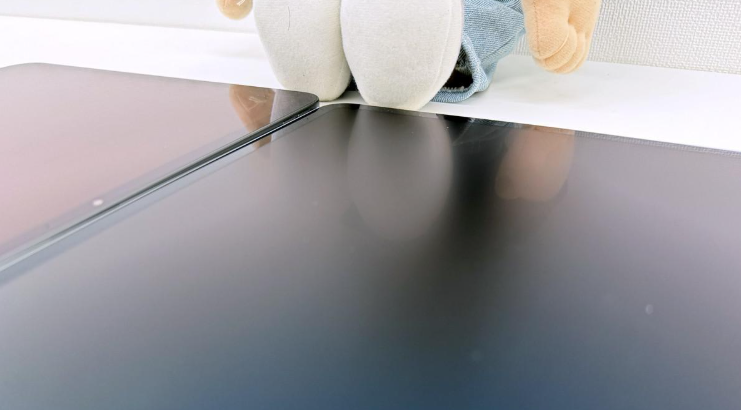
Illustrative examples of anti-glare, anti-reflective, and fingerprint-resistant surface functions. Actual appearance depends on coating formulation and the optical stack.
4.1 AG (Anti-Glare): Reducing Glare Under Hospital Lighting
Anti-glare treatment reduces strong specular reflections by scattering reflected light.
In brightly illuminated hospitals, overhead lighting or nearby windows can produce distracting reflections on smooth glass surfaces.
An AG finish may help reduce the intensity of these reflections, improving screen comfort in selected environments.
Typical applications include bedside patient monitors, nursing station terminals, medical equipment HMIs, and laboratory instruments.
However, high-haze AG treatments can also scatter transmitted light, potentially reducing perceived image sharpness or contrast.
For diagnostic imaging and high-detail interfaces, engineers should carefully evaluate haze, image clarity, and the effect on displayed grayscale information.
Disinfection consideration: AG performance must be evaluated after repeated cleaning, especially where the surface treatment uses coatings rather than a textured glass substrate.
4.2 AR (Anti-Reflective): Improving Screen Contrast and Visibility
Anti-reflective coatings reduce light reflection at glass surfaces through optical thin-film structures.
Compared with AG treatments, AR coatings aim to reduce reflected light without relying primarily on scattering.
This can improve perceived display contrast while preserving image sharpness.
AR coatings may be suitable for medical diagnostic displays, portable ultrasound interfaces, high-brightness medical monitors, and precision instrumentation.
Their actual durability depends on coating materials, deposition process, layer adhesion, and mechanical protection.
Disinfection consideration: An AR coating should be tested against the specific cleaning chemicals and wiping materials expected during clinical use. Repeated abrasion and chemical exposure may affect coating integrity and optical performance.
4.3 AF (Anti-Fingerprint): Supporting Easier Surface Cleaning
Anti-fingerprint coatings are typically designed to reduce the adhesion and visibility of skin oils and other surface contaminants.
Many AF treatments use oleophobic or hydrophobic surface chemistries that change how oils and liquids wet the glass.
This can make fingerprints easier to remove and help maintain a cleaner-looking touch surface.
For frequently operated medical equipment, AF coatings may help reduce visible smudges between cleaning cycles.
However, AF does not mean antimicrobial, sterile, or disinfectant-resistant.
An AF layer may gradually lose its repellency after repeated chemical exposure and wiping.
Where chemical durability is a priority, medical device manufacturers should request coating-specific test results after exposure to the intended disinfectants.
Comparison: AG vs. AR vs. AF
| Особенность | AG | AR | AF |
|---|---|---|---|
| Primary Purpose | Reduce harsh glare | Reduce surface reflection | Reduce fingerprint adhesion |
| Main Benefit | Visual comfort | Better perceived clarity and contrast | Easier smudge removal |
| Mechanism | Light scattering | Optical interference | Surface-energy modification |
| Potential Trade-Off | Haze and reduced fine-detail clarity | Coating cost and durability considerations | Repellency can wear over time |
| Relevant Testing | Haze and gloss | Reflectance and adhesion | Contact angle and wipe durability |
| Medical Use | Bright rooms and control panels | Imaging and high-clarity displays | Frequently touched interfaces |
Engineering recommendation: AG, AR, and AF should not be treated as interchangeable features. They can be selected individually or combined in compatible surface structures, depending on the medical device’s optical and cleaning requirements.
5. Alcohol and Hydrogen Peroxide: How Do Disinfectants Affect Touchscreen Glass?
Alcohol-Based Disinfection
Ethanol and isopropyl alcohol are commonly used in healthcare cleaning and disinfection products.
The CDC identifies alcohols as an important class of chemical disinfectants and discusses concentrations commonly used in healthcare applications.
While many uncoated glass surfaces tolerate short-term contact with common alcohol formulations, the complete touchscreen assembly may contain materials with different compatibility limits.
Potential concerns include deterioration of AF coatings, changes in decorative printing, and exposure of edge adhesives or seals.
Medical display manufacturers should therefore evaluate the complete formulation, not simply the alcohol percentage.
Hydrogen Peroxide Disinfection
Hydrogen peroxide is another disinfectant chemistry used in healthcare.
Its effect on a touchscreen depends on the formulation, concentration, exposure time, additives, and the materials being contacted.
Although glass itself may offer suitable resistance to some peroxide formulations, the same compatibility cannot be assumed for optical coatings, printed layers, adhesives, or enclosure materials.
Concentrated hydrogen peroxide and vaporized hydrogen peroxide sterilization processes should not be considered equivalent to routine peroxide wipe cleaning.
A touchscreen qualified for one process is not automatically qualified for the other.
Chemical Exposure Risk Comparison
| Disinfectant Type | Evaluation Priority |
|---|---|
| Ethanol / IPA | AF retention, printing, adhesives |
| Hydrogen Peroxide | Coatings, seals, adhesives, optical changes |
| Quaternary Ammonium | Residues, optical appearance, material compatibility |
| Chlorine-Based Products | Metal components, printing, coatings, seals |
| Combination Wipes | Full formulation and repeated-wipe effects |
The table identifies areas to assess, not guaranteed damage mechanisms. Actual material compatibility depends on the selected formulation and validated assembly.
Medical OEMs should use the device’s approved cleaning procedure and the disinfectant manufacturer’s instructions when defining qualification conditions.
6. How to Test Disinfection Resistance in Medical Touchscreens
For medical equipment OEMs, chemical compatibility should be demonstrated through documented testing rather than promotional descriptions such as “alcohol-resistant” or “medical-grade glass.”
A practical evaluation should consider the entire touchscreen assembly and the expected cleaning conditions.
6.1 Define the Intended Disinfection Procedure
Before testing, specify the actual products and procedures used in the intended clinical setting.
The test plan should document:
- Disinfectant product name and full formulation.
- Active ingredients and concentrations.
- Contact or dwell time.
- Wiping material and applied force.
- Frequency of cleaning.
- Total number of repeated cleaning cycles.
- Ambient temperature and humidity.
- Required optical and functional acceptance criteria.
Testing only with pure isopropyl alcohol may not represent the behavior of a commercially formulated disinfectant wipe containing additional ingredients.
6.2 Conduct Repeated-Wipe Durability Tests
Repeated-wipe testing simulates the combined effects of chemical contact and mechanical abrasion.
For example, a medical device development team may define 1,000, 5,000, or 10,000 cleaning cycles according to its expected use and qualification strategy.
These are illustrative engineering targets, not universal medical touchscreen requirements or QIHAN-tested performance claims.
After testing, engineers should evaluate changes in coating adhesion, optical performance, surface defects, and touch functionality.
6.3 Evaluate Optical and Surface Performance
The following measurements can help identify degradation over time.
| Test Parameter | What It Evaluates |
|---|---|
| Optical Transmittance | Changes in light transmission |
| Haze | Changes in scattered light |
| Surface Reflectance | AR coating performance |
| Water Contact Angle | Hydrophobic properties of AF coating |
| Oil Repellency | Fingerprint-resistant characteristics |
| Coating Adhesion | Stability of applied surface layers |
| Surface Inspection | Scratches, discoloration, peeling |
| Touch Accuracy | Functional stability after cleaning |
| Seal Integrity | Evidence of liquid ingress |
| Visual Inspection | Printing, edges, adhesive defects |
Acceptance thresholds should be established before testing based on the intended device requirements.
6.4 Validate the Complete Assembly
A standalone cover-glass sample may perform differently from a fully assembled touchscreen.
In actual medical equipment, disinfectant liquid can contact the bezel, edge seals, and printed borders during cleaning.
Consequently, OEM manufacturers should validate the final configuration, including cover glass, touch sensor, optical bonding, adhesives, and enclosure.
For medical device development, chemical resistance testing should be integrated into a broader risk-management and design-verification process.
7. Medical Touchscreen Applications Requiring Durable Cover Glass
Patient Monitoring Systems
Patient monitors are frequently handled and may require routine cleaning between clinical uses.
A smooth glass-front design, compatible surface treatments, and appropriate enclosure sealing can support cleaning procedures. AG or AR treatments may also improve visibility under hospital lighting.
Portable Ultrasound Equipment
Portable ultrasound interfaces require high image clarity and often experience repeated handling.
Low-reflection cover-glass designs can help preserve displayed detail, while chemical and mechanical durability should be validated against the intended cleaning procedures.
Infusion Pumps and Therapy Devices
Infusion pumps and therapy equipment need clear, dependable interfaces for displaying operating information.
Customized cover glass can support compact mechanical integration, while the complete touchscreen assembly must be validated for cleaning exposure and touch reliability.
Laboratory Diagnostic Instruments
Laboratory analyzers and point-of-care instruments may encounter disinfectant cleaning, reagent residues, and frequent operator interaction.
The cover material, optical treatments, and seals should be selected for the actual laboratory environment, including any expected chemical splashes.
8. Medical Touchscreen Cover Glass Selection Checklist for OEM Buyers
Medical equipment manufacturers should define cover-glass requirements early in the development process to reduce redesign and qualification costs.
| Технические характеристики | Recommended Evaluation |
|---|---|
| Glass Material | Soda-lime or aluminosilicate |
| Surface Strengthening | Chemical strengthening where required |
| Glass Thickness | Based on mechanics, impact requirements, and touch sensitivity |
| AG Treatment | Glare reduction and haze specification |
| AR Coating | Reflectance, transmission, coating durability |
| AF Coating | Oil repellency and durability after cleaning |
| Disinfectant Resistance | Test approved cleaning agents and formulations |
| Scratch Resistance | Defined hardness and abrasion tests |
| Touch Compatibility | PCAP sensor and glove-touch performance |
| Оптическое соединение | OCA/OCR compatibility and durability |
| Edge Design | Edge finishing, cutouts, and mechanical stress |
| Enclosure Sealing | Resistance to liquid ingress |
| Настройка | Dimensions, printing, mounting, FPC |
| Quality Documentation | Material specifications, inspection, test reports |
| Supply Management | Long-term availability and change control |
Procurement teams should also request approved material specifications and confirm whether surface coatings or adhesives can change during production without prior notification.
9. QIHAN Custom Cover Glass and Touchscreen Solutions for Medical OEMs
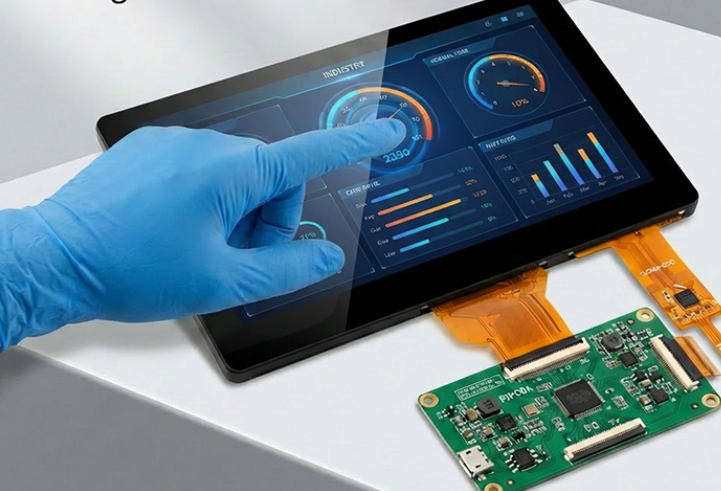
Medical equipment manufacturers often require touchscreen assemblies that combine protective glass, optical enhancements, touch sensors, and LCD modules in a compact mechanical structure.
A standard cover glass may not satisfy the display visibility, touch sensitivity, mounting, or cleaning requirements of a specialized medical instrument.
QIHAN provides OEM/ODM customization for industrial TFT LCD displays, OLED modules, capacitive touch panels, and integrated display assemblies.
According to QIHAN’s published product and solution information, customization includes cover-glass design, AG/AR/AF surface treatment options, touch integration, and optical bonding.
9.1 Custom Cover Glass and Surface Treatment Options
QIHAN supports engineering customization across several areas:
| Customization Area | QIHAN Capabilities |
|---|---|
| Защитное стекло | Custom dimensions and mechanical design |
| Surface Treatments | AG / AR / AF options |
| Printing | Custom decorative and border printing |
| Glass Appearance | 3D glass and decorative panel options |
| Touch Integration | PCAP and resistive touch panels |
| Touch Structures | G+G, G+F, G+FF |
| Оптическое соединение | OCA / OCR options |
| Display Integration | TFT LCD / OLED modules |
| Electrical Integration | Customized interfaces and driver solutions |
| OEM/ODM | Project-specific display and touch assembly design |
Specific glass substrates, chemical-strengthening processes, coating combinations, and disinfectant-resistance levels should be confirmed during the individual project evaluation.
9.2 Integrated PCAP Touchscreen and Cover Glass Design
QIHAN’s published Емкостная сенсорная панель (CTP) range includes 2.8-inch to 10.1-inch standard sizes, with custom cover-glass design, glove-touch options, optical bonding, and I2C/USB touch interfaces.
For medical applications, this integration can help equipment manufacturers align the cover-glass construction with the touchscreen’s sensing requirements.
For example, increasing glass thickness or changing surface coatings may affect capacitive touch performance. Those changes should therefore be evaluated together with the selected touch controller rather than treated as separate mechanical modifications.
9.3 Optical Bonding for Medical Display Integration
QIHAN supports OCA and OCR optical bonding for custom LCD and touchscreen assemblies.
Optical bonding can reduce internal reflections and improve perceived display clarity compared with an air-gap design.
For medical equipment, the bonding system should also be evaluated for temperature stability, optical aging, adhesion, and compatibility with surrounding materials.
The selection of AG, AR, or AF treatments should complement the complete optical stack.
A low-reflection cover glass cannot, by itself, guarantee high display readability if the underlying LCD has insufficient luminance or contrast.
9.4 OEM/ODM Engineering Support
QIHAN’s OEM/ODM model supports project-specific customization, from display selection and mechanical design through sample development and production preparation.
Medical equipment manufacturers can provide their requirements for screen dimensions, glass construction, disinfectant exposure, touch operation, and electrical interfaces to support engineering evaluation.
For hygiene-sensitive projects, procurement teams should request documented material compatibility and qualification evidence for the selected configuration.
QIHAN’s published customization capabilities should not be interpreted as a guarantee that every coating or glass configuration has already passed a particular medical disinfectant test.
Learn more about QIHAN’s Решения для медицинских дисплеев, OEM/ODM Display Customization, and TFT LCD Display Solutions.
10. Common Mistakes When Choosing Disinfection-Resistant Medical Touchscreens
Mistake 1: Assuming Chemically Strengthened Glass Is Disinfectant-Proof
Chemical strengthening improves mechanical performance but does not certify resistance to alcohol, peroxide, or other disinfectant formulations.
Coatings and surrounding materials must be tested separately.
Mistake 2: Selecting AF Coatings Without Checking Cleaning Durability
An AF coating may provide excellent initial fingerprint resistance but lose performance after repeated cleaning.
OEMs should evaluate oil repellency and surface appearance after representative wipe-cycle testing.
Mistake 3: Prioritizing AG Performance Without Considering Image Detail
Aggressive anti-glare treatment can reduce distracting reflections but may introduce haze.
Medical displays showing fine graphical or grayscale detail need an appropriate balance between glare control and image sharpness.
Mistake 4: Testing Bare Glass Instead of the Full Touch Assembly
Testing only the glass substrate may overlook failures involving decorative printing, adhesives, seals, and the touch sensor.
Final qualification should include the complete assembled product.
Mistake 5: Using Generic Chemical Resistance Claims
Statements such as “resistant to hospital disinfectants” are incomplete without identifying the tested agents, concentrations, contact times, wiping procedures, and acceptance criteria.
A documented test report provides more useful procurement evidence than a general marketing claim.
Часто задаваемые вопросы (FAQ)
Q1. What makes a medical touchscreen resistant to disinfection?
A disinfection-resistant touchscreen uses cover-glass materials, coatings, adhesives, printing, and sealing structures that have been evaluated against the intended cleaning agents and procedures. Actual resistance must be established through relevant chemical exposure and repeated-cleaning tests.
Q2. Can medical touchscreen glass withstand 70% isopropyl alcohol?
Many uncoated glass substrates tolerate routine contact with 70% isopropyl alcohol, but the complete touchscreen may include coatings and adhesives with different chemical compatibility limits. OEMs should verify the specified formulation and cleaning procedure before approving its use.
Q3. Is hydrogen peroxide safe for medical display cover glass?
Compatibility depends on the hydrogen peroxide formulation, concentration, exposure time, and display construction. Bare glass compatibility does not guarantee that AF coatings, adhesives, decorative printing, or seals will remain unaffected.
Q4. What is the difference between AG, AR, and AF touchscreen coatings?
AG reduces the intensity of direct glare through light scattering. AR reduces surface reflection to help improve clarity and perceived contrast. AF reduces the adhesion of fingerprints and oils, making smudges easier to remove. These technologies serve different purposes and may be combined when compatible.
Q5. Does chemically strengthened glass provide better scratch resistance?
Chemical strengthening can improve glass strength and damage tolerance by creating a compressive surface layer. However, scratch resistance also depends on the glass composition, surface finish, contact material, and applied force. Chemically strengthened glass is not scratch-proof.
Q6. Will frequent alcohol cleaning damage an AF coating?
It can, depending on the AF coating chemistry and cleaning procedure. Repeated chemical exposure and mechanical wiping may reduce oleophobic or hydrophobic performance. Suppliers should provide relevant durability data for the selected coating.
Q7. Which coating is best for hospital patient monitors?
The best coating depends on ambient lighting, cleaning requirements, interface design, and optical performance targets. AG may help with strong overhead glare, AR can improve clarity and reduce reflection, and AF may simplify fingerprint removal. No single treatment is ideal for every patient monitor.
Q8. Can a medical touchscreen combine AG, AR, and AF treatments?
Yes, compatible treatments can be combined in selected optical structures. However, the performance and durability of the combination must be evaluated as a complete system, particularly after repeated disinfection.
Q9. Can QIHAN customize medical touchscreen cover glass?
Yes. QIHAN publishes OEM/ODM capabilities for custom cover glass, AG/AR/AF options, decorative printing, touch integration, and optical bonding. Specific chemically strengthened glass and disinfectant-resistance requirements should be reviewed during engineering development.
Q10. What tests should medical OEMs request from a touchscreen supplier?
OEMs should request relevant chemical compatibility tests, repeated-wipe durability results, optical measurements, coating adhesion data, surface inspection results, touch-function verification, and material traceability documentation. Test conditions should reflect the device’s intended cleaning procedures.
Q11. Are AG, AR, and AF coatings antimicrobial?
Not necessarily. AG, AR, and AF are optical or surface-cleanliness treatments, not proof of antimicrobial activity. Any antimicrobial claim requires separate, appropriately validated evidence and must comply with applicable regulatory requirements.
Q12. How can medical OEMs select a reliable custom touchscreen manufacturer?
Manufacturers should evaluate glass customization capabilities, optical coating options, touch-controller integration, material documentation, prototype testing, design-change control, and long-term component availability.
Conclusion: Designing Medical Touchscreens for Long-Term Cleaning Durability
Medical touchscreen cover glass must support more than clear images and responsive operation.
In clinical environments, repeated disinfection introduces chemical exposure, mechanical wiping, and potential stress on coatings, adhesives, and enclosure seals.
Chemically strengthened glass can improve mechanical robustness, while AG, AR, and AF technologies provide different optical and surface-cleanliness benefits.
However, none of these features independently guarantees resistance to hospital disinfectants.
The most reliable approach is to select and validate the complete cover-glass and touchscreen assembly for the actual cleaning procedures expected during the medical device’s service life.
For medical equipment manufacturers seeking customized display integration, QIHAN provides TFT LCD modules, PCAP touch panels, custom cover-glass design, AG/AR/AF options, and optical bonding services.
Looking for a custom medical touchscreen or cover-glass solution?
Explore QIHAN’s Custom Display and Touchscreen Solutions and share your mechanical drawings, cleaning requirements, optical specifications, and expected production quantities with our engineering team to discuss your next OEM/ODM project.
 English
 Português
 Français
 Deutsch
 Español
 Русский