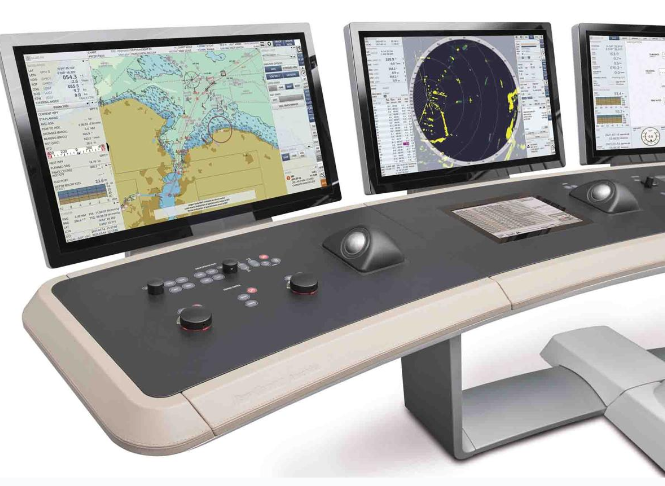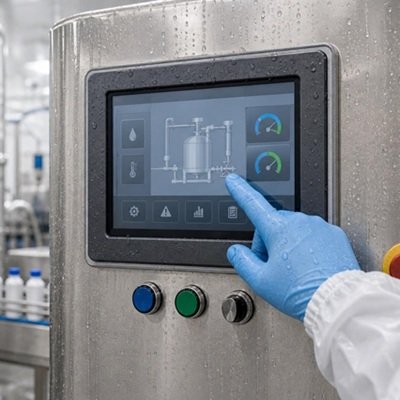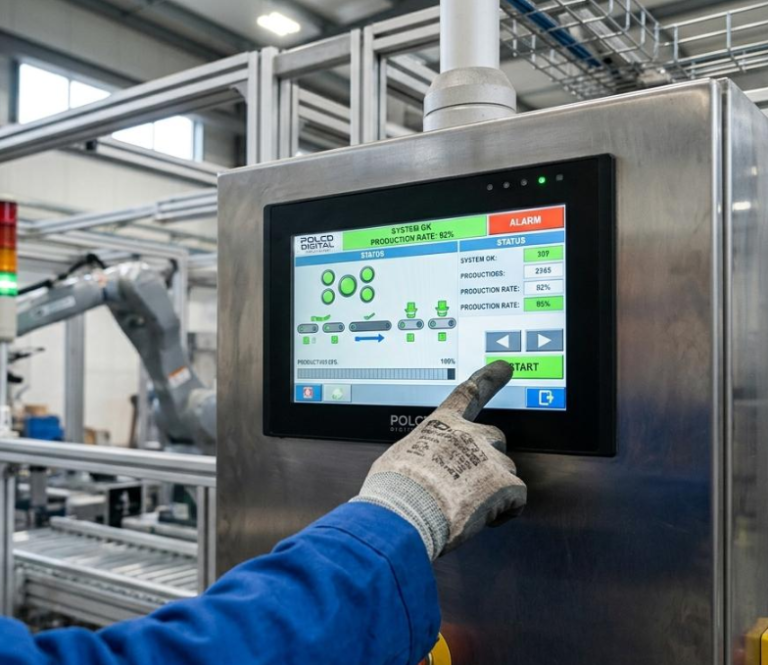
TFT-LCD und OLED können beide hervorragende Produktschnittstellen erzeugen. Die nützliche Frage ist nicht, welche Technologie in einem dunklen Ausstellungsraum besser aussieht. Sie lautet, welche Technologie nach Tausenden von Betriebsstunden in ihrer realen Umgebung die visuellen, elektrischen und lieferbezogenen Anforderungen des Produkts erfüllen wird.
Die Antwort hängt oft vom Bildschirminhalt ab.
Eine dunkle Benutzeroberfläche, die kurz aufwacht, um wechselnde Informationen anzuzeigen, stellt eine günstige Arbeitslast für OLED dar. Eine Maschinen-HMI, die während einer langen Schicht dieselbe Symbolleiste, denselben Statusbereich und dieselben Warnsymbole anzeigt, weist ein anderes Alterungsmuster auf. Ein helles Außenterminal stellt andere Anforderungen an beide Technologien als ein Bettseiten-Controller, der bei niedriger Leuchtdichte verwendet wird.
Dieser Leitfaden vergleicht TFT-LCD vs. OLED aus der Perspektive des industriellen und kommerziellen Produktdesigns: Inhalts-Einschaltzyklus, Umgebungslicht, Leistung, Lebensdauer, thermisches Verhalten, verfügbare Größen, Kosten und Lieferkontinuität.
Die kurze Antwort
Wählen Sie OLED, wenn das Produkt von sehr tiefen Schwarzwerten, hohem wahrgenommenem Kontrast, weiten Betrachtungswinkeln, schneller Pixelreaktion und einer dünnen selbstemittierenden Struktur profitiert – und wenn die Benutzeroberfläche und der Einschaltzyklus im Hinblick auf differenzielle Pixelalterung gesteuert werden können.
Wählen Sie TFT-LCD wenn das Produkt eine breite Auswahl an Größen, Auflösungen, Schnittstellen, Helligkeitskonfigurationen und Lieferanten benötigt oder wenn statische Inhalte über lange Betriebszeiten auf dem Bildschirm verbleiben.
Keine der beiden Technologien ist automatisch zuverlässiger oder energieeffizienter. Vergleichen Sie beide anhand der tatsächlichen Benutzeroberfläche, Leuchtdichte, Temperatur und Betriebsstunden.
Beginnen Sie mit einem Inhalts- und Einschaltzyklusprofil
Bevor Sie Displaymuster prüfen, beschreiben Sie, was der Bildschirm im Laufe der Zeit anzeigen wird.
Erfassen Sie:
- Tägliche eingeschaltete Stunden
- Prozentsatz der Zeit, in der der Bildschirm aktiv ist
- Durchschnittliche und maximale Leuchtdichte
- Prozentsatz weißer oder heller Pixel in typischen Bildschirmen
- Statische Elemente wie Logos, Navigationsleisten und Warnbereiche
- Häufigkeit von Vollbildänderungen
- Anforderungen an Video, Animation und Wellenform
- Erwartete Produktlebensdauer
- Innen-, Außen- und Nachtbetriebsbedingungen
Dieses Profil offenbart Risiken, die eine Diagonale und Auflösung nicht erkennen lassen.
Bei OLED leisten helle Pixel mehr Arbeit als dunkle Pixel, und wiederkehrende statische Muster können Bereiche ungleichmäßig altern lassen. Bei TFT-LCD verbraucht die Hintergrundbeleuchtung Leistung, wann immer sie eingeschaltet ist, unabhängig davon, ob das Bild überwiegend schwarz oder überwiegend weiß ist. Dieselbe Benutzeroberfläche kann daher bei den beiden Technologien sehr unterschiedliches Leistungs- und Alterungsverhalten erzeugen.
Wie TFT-LCD Technologie funktioniert
Ein TFT-LCD verwendet eine Hintergrundbeleuchtung, um Licht zu erzeugen. Flüssigkristallzellen steuern, wie viel dieses Lichts an jedem Pixel durch Farbfilter und Polarisatoren hindurchtritt. Dünnschichttransistoren adressieren die Pixel und halten den erforderlichen Bildzustand.
Die Displaybaugruppe umfasst normalerweise:
- TFT-Glas und Flüssigkristallschicht
- Farbfilter und Polarisatoren
- LED-Hintergrundbeleuchtung
- Lichtleiter und optische Folien
- Treiber-IC und FPC
- Metall- oder Kunststoffrahmen
Da die Hintergrundbeleuchtung das Panel als System beleuchtet, wird die TFT-Leistung stark von der Helligkeit der Hintergrundbeleuchtung und der Betriebszeit beeinflusst. Eine dunkle Benutzeroberfläche schaltet bei einem typischen kleinen edge-lit TFT nicht einzelne Hintergrundbeleuchtungszonen ab.
TFT-LCD ist in mehreren Panelmodi erhältlich. IPS bietet im Allgemeinen stabilere Farbe und stabileren Kontrast über Betrachtungsrichtungen hinweg. TN kann praktikabel bleiben, wenn die Betrachtungsposition kontrolliert wird und Kosten oder Verfügbarkeit wichtig sind.
Wie OLED Technologie funktioniert
OLED-Pixel emittieren ihr eigenes Licht, wenn sie angesteuert werden. Es ist keine herkömmliche LED-Hintergrundbeleuchtung und kein Flüssigkristallverschluss erforderlich.
Wenn ein OLED-Pixel Schwarz anzeigt, emittiert es wenig oder kein Licht. Dadurch entstehen der tiefe Schwarzwert und der hohe wahrgenommene Kontrast, die mit OLED verbunden werden. Die selbstemittierende Struktur kann auch dünne Module und weite Betrachtungswinkel unterstützen.
Die OLED-Leistung hängt stark vom Bildinhalt und der Leuchtdichte ab. Ein überwiegend schwarzer Bildschirm mit begrenzten hellen Informationen kann effizient sein. Eine helle, überwiegend weiße Benutzeroberfläche steuert viele Pixel gleichzeitig an und kann wesentlich mehr Leistung verbrauchen.
OLED-Materialien altern, während sie Licht emittieren. Da Pixel nicht immer dieselbe Arbeitslast erhalten, können wiederkehrende helle statische Elemente eine ungleichmäßige Alterung erzeugen, die als Bildretention oder Burn-in sichtbar wird.
TFT-LCD vs. OLED auf einen Blick
| Entscheidungsfaktor | TFT-LCD | OLED |
|---|---|---|
| Lichtquelle | LED-Hintergrundbeleuchtung hinter dem Panel | Jedes Pixel emittiert Licht |
| Schwarzwert | Begrenzt durch Hintergrundbeleuchtungs-Leckage und optischen Stapel | Sehr tiefes Schwarz, weil dunkle Pixel ausgeschaltet sind |
| Kontrast bei dunklen Bedingungen | Gut bis sehr gut, abhängig von Panel und Hintergrundbeleuchtung | Typischerweise ausgezeichnet |
| Betrachtungswinkel | Abhängig vom Panel-Modus; IPS ist stark | Im Allgemeinen weit |
| Pixelreaktionszeit | Geeignet für die meisten industriellen Bewegungs- und Videoanwendungen | Sehr schnell |
| Leistungsverhalten | Stark an das Hintergrundbeleuchtungsniveau und die Einschaltdauer gekoppelt | Stark an Bildinhalt und Leuchtdichte gekoppelt |
| Bedenken bei statischen Bildern | Keine OLED-typische differentielle emissionsbedingte Alterung | Ungleichmäßige Pixelalterung erfordert Berücksichtigung |
| Ansatz für den Außenbereich | Hohe Helligkeit, AR, optische Bondung oder transflektives Design | Erfordert ausreichende Ausgangsleistung und Reflexionskontrolle; hohe Ausgangsleistung beeinflusst Leistung und Alterung |
| Mechanischer Aufbau | Umfasst Hintergrundbeleuchtung und optische Folien | Kann ohne herkömmliche Hintergrundbeleuchtung dünner sein |
| Lieferauswahl | Breit in vielen kleinen und mittleren Größen | Stärker abhängig von OLED-Typ, Größe und Lieferantenplattform |
| Übliche industrielle Stärke | Statische HMI-Inhalte, lange Einschaltdauer, Plattformvielfalt | Dunkle UI, Premium-Kontrast, kompaktes oder dünnes Design |
Diese Tabelle zeigt Tendenzen auf, keine garantierten Werte. Vergleichen Sie exakte Module statt allein Technologienamen.
Helligkeit und Kontrast
OLED hat einen klaren Vorteil beim Schwarzwert. Ein dunkler Pixel muss keine Hintergrundbeleuchtung blockieren, sodass schwarze Bereiche nahe an der unbeleuchteten Frontfläche erscheinen können.
Der Schwarzwert von TFT-LCD hängt davon ab, wie effektiv die Flüssigkristalle und Polarisatoren die Hintergrundbeleuchtung blockieren. IPS- und TN-Panels haben unterschiedliches optisches Verhalten, und das Endergebnis hängt auch von Deckglas, Bondung und Betrachtungswinkel ab.
Hoher Kontrast in einem dunklen Raum bedeutet nicht automatisch bessere Sichtbarkeit bei Tageslicht. Reflektiertes Umgebungslicht kann den scheinbaren Schwarzwert beider Technologien anheben.
Spezifizieren Sie den Kontrast dort, wo das Produkt verwendet wird
Das Kontrastverhältnis im Innenbereich wird unter kontrollierten Bedingungen gemessen. Die Leistung im Außenbereich oder bei hohem Umgebungslicht hängt vom Verhältnis zwischen nutzbarem Bildschirmlicht und reflektiertem Licht des gesamten optischen Aufbaus ab.
Fragen Sie:
- Wird die Leuchtdichte am nackten Panel oder an der fertigen Deckfläche gemessen?
- Wie hoch ist die Reflexion der Frontfläche?
- Ist das Touchpanel luftgebondet oder optisch gebondet?
- Verwendet das Deckglas eine AR- oder AG-Behandlung?
- Was passiert beim tatsächlichen Betrachtungswinkel?
- Wie hoch ist die Innentemperatur bei maximaler Leuchtdichte?
Ein helles Display hinter reflektierendem Glas kann weniger lesbar sein als ein Display mit niedrigerer Leuchtdichte und einem besseren optischen Aufbau.
Sichtbarkeit im Außenbereich
TFT-LCD hat mehrere etablierte Wege zur Ablesbarkeit im Außenbereich:
- LED-Hintergrundbeleuchtung mit höherer Ausgangsleistung
- Reflexionsarme Deckglasbehandlung
- Optische Bondung
- Transflektive Panel-Konstruktion
- Mechanische Abschattung im Gehäuse
Jeder Weg hat Kompromisse. Eine stärkere Hintergrundbeleuchtung erhöht Leistung und Wärme. Aggressive AG-Behandlung kann feine Pixel weicher erscheinen lassen. Optische Bondung beeinflusst Kosten und Reparatur. Transflektives TFT kann bei der Innenraum-Farbperformance zugunsten der Nutzung bei Umgebungslicht Abstriche machen.
OLED can also be readable outdoors when it produces sufficient luminance and the front surface controls reflection. However, high full-screen output can increase electrical and thermal load and may accelerate emissive aging. The exact module, content and duty cycle must be tested.
Do not choose between industrial LCD vs. OLED using peak brightness alone. Use a production-intent sample with the real cover, UI and enclosure under representative sun and temperature.
Viewing Angle and Image Behavior
OLED generally maintains strong contrast across wide viewing angles, although color or luminance can still change with angle depending on construction.
IPS TFT LCD can also provide wide, stable viewing suitable for shared HMIs and devices viewed from standing and seated positions. TN may show stronger directional changes and should be matched to a known viewing position.
For either technology, verify:
- Landscape or portrait orientation
- Primary and worst viewing positions
- Color and gray-scale shift
- Black-state appearance
- Polarized-sunglasses compatibility
- Reflections from the cover stack
Test real interface screens. A colorful image is a poor substitute for small text, dark menus and status colors.
Pixel Response and Motion
OLED pixels switch quickly, which can produce clear motion and rapid transitions.
TFT LCD response depends on liquid-crystal mode and temperature. Most industrial interfaces, graphs and video can be served well by a suitable TFT, but low temperature can slow transitions and create smearing.
Products displaying camera images, fast waveforms or moving pointers should define an acceptable response time at the temperature limits. Do not assume room-temperature behavior represents cold operation.
For static or slowly changing information, the practical value of OLED’s faster response may be small.
Power Consumption: The UI Decides
Statements such as “OLED uses less power” or “LCD is more efficient” are incomplete.
TFT-LCD Power Pattern
The LED backlight is normally the dominant load in a small TFT module. Power changes with brightness and dimming duty but only slightly with image content.
This makes consumption relatively predictable. A white screen and a black screen may use similar display power when the backlight setting is unchanged.
OLED Power Pattern
OLED pixels consume power according to emitted light. Dark pixels require little display power, while bright pixels require more. Full-screen white at high luminance can create a very different load from a dark status interface.
How to Compare Fairly
Measure or estimate power using:
- The same physical display area
- The same perceived brightness
- The production user interface
- Typical, maximum and standby screens
- Real duty cycle
- Expected temperature
- Display and controller electronics
Average power over a complete task is more useful than one pattern on a datasheet.
Lifetime and the Meaning of Failure
Display life should be connected to an end-of-life criterion.
A display may still produce an image after years of use but no longer meet required brightness, uniformity, color or touch performance.
Define:
- Required powered-on hours
- Minimum end-of-life luminance
- Allowed color or uniformity change
- Maximum static-content exposure
- Operating temperature and brightness profile
- Service and replacement strategy
TFT LCD Aging
TFT modules can experience LED lumen depreciation, polarizer aging, adhesive changes and other material effects. Backlight lifetime is often specified as the time until luminance falls to a defined fraction of its initial value under stated current and temperature conditions.
Confirm the endpoint, drive current, temperature and whether the figure is typical or minimum.
OLED Aging
OLED materials lose output with use. Aging depends on brightness, temperature, color and content. Regions showing bright static elements receive a different workload from dark or changing regions.
This does not mean every OLED will quickly burn in. It means the UI and duty cycle belong in the reliability assessment.
Burn-In and Image Retention
Burn-in is the visible result of uneven, persistent OLED pixel aging. Temporary image retention and permanent differential aging should not be treated as identical, but both require a defined evaluation method.
Common risk patterns include:
- A fixed logo
- A permanent navigation bar
- Static machine-state labels
- Bright warning zones in the same location
- A clock or numeric field that changes only partly
- Repeated menu screens during long shifts
Mitigation may include:
- Automatic screen timeout
- Lower average luminance
- Moving or rotating static elements
- Full-screen content changes
- Dark themes designed around the OLED workload
- Pixel-shift or compensation functions supported by the selected platform
- Task-based life testing with representative screens
Do not hide essential controls or move safety-relevant information merely to protect the display. Product usability and system requirements remain the priority.
Why TFT Avoids This Specific Risk
TFT pixels control a shared backlight rather than emitting their own light. They do not experience OLED’s pattern-dependent emissive aging.
TFT has other aging mechanisms, including backlight depreciation and possible image-sticking behavior under some conditions. The advantage is not that TFT never ages; it is that long-lived static layouts do not create the same OLED burn-in mechanism.
Reliability at Temperature
Temperature affects both technologies, but the failure mechanisms differ.
TFT liquid-crystal response can slow at low temperature. High temperature can affect contrast, backlight, polarizers and adhesives.
OLED luminance, efficiency, color balance and aging rate can change with temperature. Module construction, driver behavior and material system determine the exact response.
For either technology, distinguish:
- Operating temperature
- Storage temperature
- Survival limit
- Startup requirement
- Optical performance at the endpoints
- Recovery after exposure
A range on a datasheet does not guarantee that image quality remains unchanged throughout that range.
Test the finished touch and cover assembly because adhesives, sensors and cover materials also respond to temperature cycling.
Cost: Compare the Complete Product
Panel price is only one part of display cost.
TFT LCD often benefits from a broad platform base, mature tooling and many standard configurations. OLED may reduce thickness or remove the backlight assembly, which can create value elsewhere in the product.
Compare:
- Module and controller price
- Tooling and NRE
- Touch and cover integration
- Backlight or power-supply design
- Thermal management
- Host processor and interface cost
- Qualification and life testing
- Expected yield
- Service and replacement cost
- Supply-risk mitigation
A more expensive display can lower total product cost if it eliminates mechanical parts or solves a critical user requirement. A cheaper panel can become expensive if it forces redesign or repeated qualification.
Size, Resolution and Form-Factor Availability
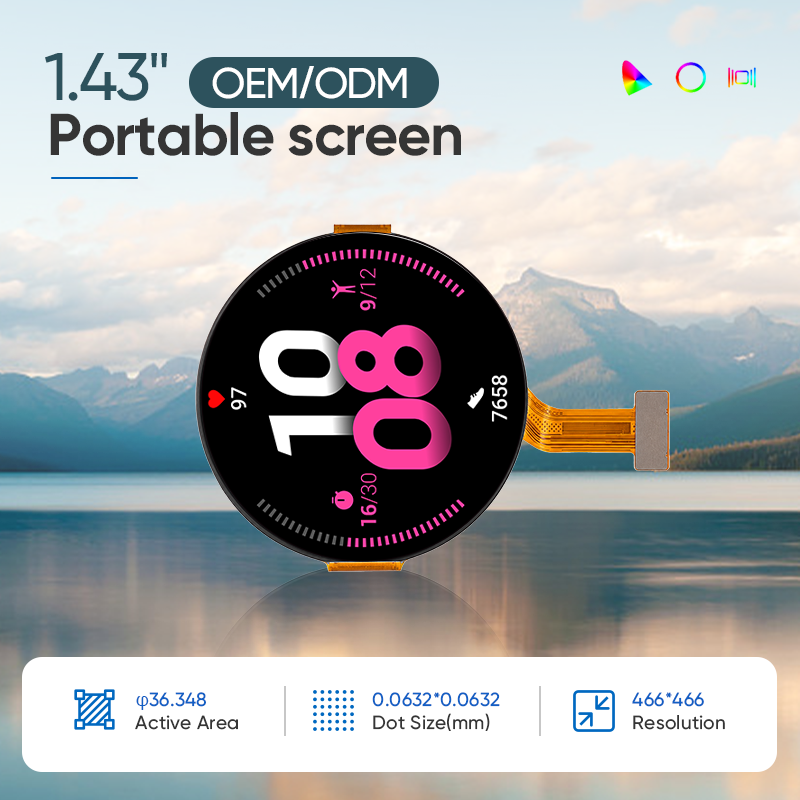
TFT LCD is widely available across small and medium sizes, standard aspect ratios, round formats, bar displays and multiple interface families.
OLED availability depends on technology and platform. Small monochrome PMOLED modules are common for status displays. Color AMOLED provides a different set of sizes, resolutions and commercial conditions.
Do not treat all OLED as one category. A 0.96-inch monochrome PMOLED and a color AMOLED use different supply chains and address different product needs.
Before committing to a mechanical design, confirm:
- Active area and module outline
- Resolution and orientation
- FPC and connector location
- Display controller
- Touch availability
- Minimum order and tooling
- Supplier roadmap
- Expected production and service period
Interfaces and Host Integration
Small TFT and OLED modules may use SPI or MCU-style interfaces. Higher-resolution modules may use RGB, MIPI DSI, LVDS, eDP or a driver-board conversion.
Interface availability is tied to the exact module, not the display technology alone.
Check:
- Host processor peripheral
- Resolution, color depth and frame rate
- Frame-buffer memory
- Initialization sequence
- Logic and power rails
- Backlight control for TFT
- Display-current behavior for OLED
- Cable length and signal integrity
- Driver and operating-system support
Changing from TFT to OLED is rarely a drop-in optical decision. Power, initialization, timing, mechanical fit and thermal behavior may all change.
Supply and Lifecycle Considerations
Industrial and commercial products may remain in production longer than the consumer device that originally drove a display platform.
TFT LCD often offers more choices within common sizes and resolutions, but similar-looking modules are not automatically interchangeable. OLED may have fewer qualified platform alternatives in a particular size.
For either technology, create a display passport containing:
- Full part number and revision
- Drawing and controlled dimensions
- Connector and pinout
- Timing and initialization files
- Optical acceptance criteria
- Touch firmware
- Cover and bonding stack
- Approved sample record
- Change-notification contact
Ask how panel, driver IC and material changes are communicated. Discuss alternate platforms before the original part approaches end of life.
Market availability changes over time. Industry research firms such as Omdia track TFT LCD and OLED supply, pricing and capacity, but a market trend does not guarantee continuity for one module. Use current project-specific commitments and documented change processes.
Which Technology Is Better for Industrial Applications?
TFT LCD is often the practical default for industrial HMIs, medical instruments, automation controls and outdoor equipment. Common reasons include long static-content periods, broad module availability, predictable backlight power and numerous size, brightness and interface options.
OLED can be the better choice for an industrial product when:
- The interface is primarily dark
- Information changes regularly
- Deep black and high perceived contrast matter
- The module must be thin
- Users view it from extreme angles
- Fast response is important
- The duty cycle and luminance can be controlled
The term “industrial” does not automatically favor TFT. The application profile does.
Industrial LCD vs. OLED Decision Table
| Product behavior | Likely starting point | Reason to validate |
|---|---|---|
| Static HMI shown throughout a long shift | TFT-LCD | Avoids OLED differential emissive aging; check backlight life |
| Dark handheld interface used briefly | OLED | Deep black and content-dependent power can be valuable |
| Outdoor terminal with continuous operation | High-brightness or transflective TFT | Broad optical options; verify thermal load and reflections |
| Premium compact controller | OLED or IPS TFT | Compare depth, black appearance, cost and static UI |
| Live waveform or camera image | OLED or suitable TFT | Check response, bandwidth, temperature and latency |
| Long-support industrial product | TFT LCD often offers more platform choice | Confirm exact lifecycle and alternate strategy |
| Always-on bright white interface | TFT LCD is often easier to manage | Compare OLED power and aging with real content |
These are starting points, not final selections.
When TFT LCD Remains the Practical Choice
Static Interfaces
Industrial screens frequently keep menus, labels, scales and status areas in fixed positions. TFT avoids OLED’s pattern-dependent emissive aging risk.
Broad Platform Choice
TFT LCD is available in many combinations of size, aspect ratio, resolution, panel mode, brightness and interface. This increases the chance of finding a standard or semi-custom base.
High and Adjustable Brightness
TFT backlights can be configured for indoor, high-brightness or selected sunlight-readable applications. The power and heat must still be engineered.
Predictable Power for Mixed Content
When screen content varies between dark and bright pages, TFT backlight power remains comparatively stable at a fixed brightness setting.
Long Production Programs
A broader ecosystem can provide more options for adaptation or replacement, though no supplier should promise unlimited availability without a program-specific agreement.
Cost-Sensitive Full-Color Products
For many standard sizes, TFT provides a competitive path to a full-color interface. Total cost should still include touch, cover, bonding, electronics and qualification.
When OLED Is Worth the Trade-Off
OLED is not merely a premium alternative. It can solve real product constraints.
Choose it deliberately when the user experience depends on deep black, dark-room viewing, fast response, wide viewing or a thin structure. Compact monochrome OLED can also be effective for simple text and status information.
The project should then manage content, temperature, luminance and lifetime as one system. A well-matched OLED application can be more appropriate than a conventional TFT even if TFT is easier to source.
Prototype Both with the Real Interface
A fair comparison requires production-intent conditions.
Use:
- The same physical image area
- Equivalent perceived brightness
- The actual UI and content sequence
- Intended cover lens and bonding
- Typical and maximum temperature
- Real operating hours and sleep behavior
- Host processor and interface
Measure:
- Average and peak display power
- Finished-surface luminance
- Day and night readability
- Viewing-angle behavior
- Image response at temperature
- Housing temperature
- Uniformity after an accelerated representative-content test
Document the test conditions. A photo of two samples without exposure, camera and brightness information is not reliable evidence.
Questions to Ask a Display Supplier
- Which exact TFT or OLED technology is being proposed?
- Where is luminance measured?
- How is lifetime defined, and under which content, current and temperature?
- What static-content limits or mitigation are recommended?
- Does the temperature range include startup and optical performance?
- Which sizes, resolutions and interfaces are standard?
- Which elements can be customized without changing the core panel?
- How are controller, panel and material changes communicated?
- What evidence applies to the exact touch and cover stack?
- What should be validated in the finished product?
Answers should be tied to a part number and revision, not only to a technology category.
How QIHAN Supports TFT LCD and OLED Selection
QIHAN manufactures and supplies small and medium-sized TFT LCD, OLED, LCD module and touch-display solutions.
QIHAN’s published TFT range extends from 0.96 to 15.6 inches for industrial, embedded and HMI applications. Available project options include selected high-brightness, transflective and wide-temperature TFT configurations, touch integration, cover glass, optical bonding, FPC customization, interfaces and driver boards.
QIHAN also supplies OLED display solutions, including compact modules for applications where self-emissive contrast and small size are useful.
Available lifetime, temperature, brightness, MOQ and supply terms depend on the exact TFT or OLED platform. They should be confirmed in the project specification and quotation.
Häufig gestellte Fragen
Is OLED always better than TFT LCD?
No. OLED offers deep black, high perceived contrast, wide viewing and fast response. TFT often offers broader platform availability, predictable backlight behavior and lower risk for long-lived static interfaces. The better choice depends on the product.
Does OLED always use less power?
No. OLED power depends on content and luminance. A dark interface may be efficient, while a bright white screen can use substantially more power. TFT consumption is driven mainly by backlight brightness and on-time.
Can OLED burn-in occur in an industrial HMI?
Yes, uneven pixel aging can become visible when bright static content remains in the same location for long periods. Risk depends on content, luminance, temperature and duration. Test representative screens and use suitable mitigation.
Does TFT LCD suffer from burn-in?
TFT does not have the same differential emissive aging mechanism as OLED. It can have other aging effects, including backlight depreciation and possible temporary image sticking under some conditions.
Which technology is better outdoors?
Neither technology wins automatically. TFT offers high-brightness, AR, optical-bonding and transflective options. OLED can also be visible outdoors, but reflection, power, heat and aging must be assessed. Test the finished stack in representative sunlight.
Which display has a longer lifetime?
There is no universal answer. Lifetime depends on the definition of failure, brightness, temperature, image content, operating hours and module design. Compare conditions rather than headline hour values.
Is TFT LCD cheaper than OLED?
TFT is often cost-effective in common sizes, but the result varies by module and volume. Compare the complete assembly, electronics, tooling, qualification and service cost.
Can QIHAN help replace OLED with a TFT display?
QIHAN can evaluate available TFT platforms and project adaptations such as FPC, interface, backlight, touch, cover and mechanical changes. A replacement is not automatically drop-in because power, timing, optics and dimensions may differ.
Choose the Workload, Not the Showroom Winner
TFT LCD vs. OLED is not a contest with one permanent winner.
OLED is compelling when the product uses dark, changing content and benefits from deep black, wide viewing or a thin structure. TFT LCD remains practical when static content, long operating periods, platform choice, high-brightness options and supply flexibility carry more weight.
Build a content and duty-cycle profile before selecting either technology. Then test the actual interface at the required brightness, temperature and viewing conditions.
QIHAN can help compare a small TFT LCD or OLED module and define the touch, cover, bonding, interface and mechanical adaptations required for your product.