In LCD manufacturing, the liquid crystal injection and sealing process is one of the most important steps that determines display reliability, optical performance, and long-term product stability.
After the LCD glass cell is prepared, liquid crystal material must be injected into the empty cell under controlled conditions. The cell must then be sealed properly to prevent air, moisture, dust, or impurities from entering the display structure.
For industrial LCD displays, custom LCD modules, segment LCD displays, and graphic LCD modules, a stable injection and sealing process helps reduce defects such as bubbles, black spots, ghost images, poor contrast, and display failure.
What Is Liquid Crystal Injection in LCD Manufacturing?
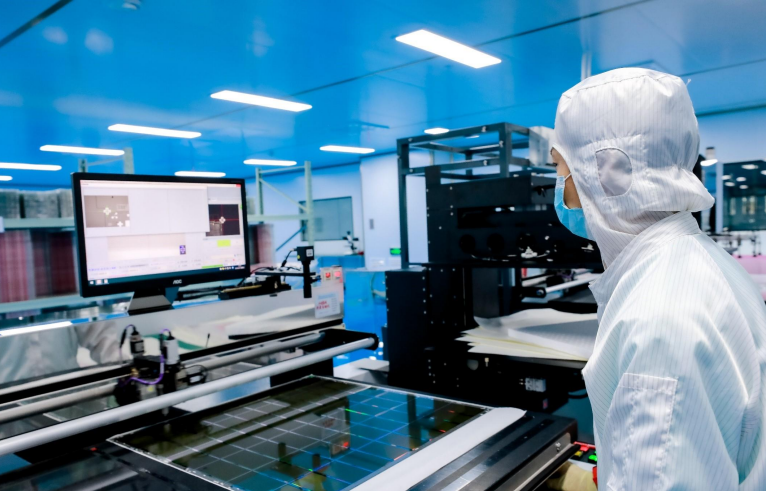
Liquid crystal injection is the process of filling liquid crystal material into an empty LCD glass cell.
Before injection, both the empty LCD cell and the liquid crystal material must be carefully degassed. This is necessary because moisture, oxygen, and other gases may be absorbed on the inner surface of the LCD cell.
If these gases remain inside the display, they may cause:
- Bubbles inside the LCD cell
- Poor display uniformity
- Reduced contrast
- Blackened transparent electrodes
- Latent images
- Lower product reliability
This is why vacuum treatment is widely used before liquid crystal filling.
Why Vacuum Degassing Is Important
During LCD operation, residual moisture or gas inside the LCD cell can react with electrodes and liquid crystal material.
Even a small amount of gas may expand inside the small LCD cell structure and affect display performance.
Vacuum degassing helps remove:
- Air
- Moisture
- Residual gas
- Volatile impurities
This improves LCD display quality and long-term stability, especially for industrial LCD modules and custom display projects that require stable performance over years of use.
How Liquid Crystal Is Injected into an LCD Cell
After vacuum degassing, liquid crystal material is introduced into the empty cell through the injection port.
For small LCD cells, capillary action can help draw liquid crystal material into the cell. After most of the cell is filled, dry inert gas such as nitrogen or argon may be used to apply pressure and complete the filling process.
The main goals of this process are:
- Complete filling
- No bubbles
- No contamination
- Stable cell gap
- Uniform optical performance
Two Common LCD Injection Methods
1. Needle Injection Method
In the needle injection method, the LCD cell is placed under vacuum, and liquid crystal is applied to the injection port using a needle.
The liquid crystal enters the cell with the help of pressure difference.
Advantages
- Saves liquid crystal material
- Suitable for small injection ports
- Useful for small-size LCD products
Limitations
- Higher risk of bubble formation
- Not ideal for large injection areas
- Requires precise process control
2. Immersion Injection Method
In the immersion injection method, the evacuated LCD cell is inverted and placed onto a liquid crystal-filled medium. After the chamber is returned to pressure, liquid crystal enters the cell through the injection port.
Advantages
- Suitable for different port sizes
- Lower bubble risk
- Better filling stability
Limitations
- Uses more liquid crystal material
- Requires careful process management
For custom LCD display manufacturing, the right injection method depends on the LCD size, cell structure, production volume, and quality requirements.
What Is LCD Cell Sealing?
After liquid crystal injection, the LCD cell must be sealed tightly.
The sealing process prevents:
- Moisture entering the LCD cell
- Gas contamination
- Liquid crystal leakage
- Dust or impurities entering the display
- Long-term reliability failure
Sealing is usually completed with special sealing glue or sealant. The sealant is cured by UV light or heat to form a stable and durable sealing structure.
UV Curing vs Thermal Curing
UV Curing
UV curing uses ultraviolet light to cure the sealing glue.
It is widely used in modern LCD manufacturing because it offers:
- Fast curing speed
- Good process control
- Lower thermal stress
- High production efficiency
Thermal Curing
Thermal curing uses heat to cure the sealing material.
It can provide strong bonding performance, but it may require longer processing time and more careful temperature control.
Today, many LCD display manufacturers prefer UV curing for efficiency and consistency.
Key Quality Control Points in LCD Injection and Sealing
A reliable LCD injection and sealing process requires strict control at every step.
Important control points include:
1. Clean Injection Area
The injection port and surrounding sealing area must remain clean. Any contamination may reduce sealing strength or cause display defects.
2. Correct Filling Time
If filling time is too short, the LCD cell may not be completely filled. If the process is too long, production efficiency may be affected.
3. No Impurities Inside the Cell
Dust, particles, moisture, or gas can significantly reduce LCD display quality.
4. Proper Sealant Amount
Too little sealing glue may reduce sealing reliability. Too much glue may affect appearance or interfere with later assembly.
5. Surface Cleaning After Sealing
After sealing, remaining glue, liquid crystal, and surface dirt must be removed to ensure proper post-processing and final product appearance.
Why Re-Alignment Is Needed After Liquid Crystal Injection
After the LCD cell is filled, the liquid crystal molecules may not immediately reach the required alignment state.
To improve molecular alignment, the LCD cell may be placed into a heating chamber for a controlled period.
This helps the liquid crystal molecules arrange more uniformly inside the cell, improving:
- Display contrast
- Viewing performance
- Optical consistency
- Long-term stability
This step is especially important for high-quality LCD modules and customized display products.
Why This Process Matters for Custom LCD Displays
For buyers, engineers, and product developers, LCD injection and sealing may seem like an internal factory process. However, it directly affects the final display performance.
A poorly controlled process may lead to:
- Bubbles
- Uneven display
- Low contrast
- Shorter product lifespan
- Moisture-related defects
- Mass production instability
A well-controlled process improves:
- Product reliability
- Display clarity
- Stable mass production
- Industrial-grade performance
- Long-term supply quality
For industrial control panels, medical devices, automotive electronics, smart meters, and IoT equipment, these details are critical.
Applications That Require Reliable LCD Injection and Sealing
QIHAN provides custom LCD display solutions for applications such as:
- Industrial LCD displays
- Medical device displays
- Smart meter LCD modules
- Automotive display modules
- HMI displays
- IoT control panels
- Handheld testing instruments
- Home appliance displays
- Segment LCD displays
- Graphic LCD modules
Each application may require different LCD structure, viewing angle, temperature range, brightness, interface, and touch solution.
FAQ
What is liquid crystal injection in LCD manufacturing?
Liquid crystal injection is the process of filling liquid crystal material into an empty LCD glass cell under controlled vacuum and pressure conditions.
Why must the LCD cell be degassed before injection?
Degassing removes air, moisture, and residual gases. This helps prevent bubbles, impurities, electrode reactions, and display defects.
What happens if bubbles appear inside an LCD display?
Bubbles can reduce display quality, affect contrast, cause visible defects, and lower the reliability of the LCD module.
What is the purpose of LCD cell sealing?
LCD cell sealing prevents moisture, gas, dust, and impurities from entering the display and also prevents liquid crystal leakage.
Which sealing method is commonly used in LCD manufacturing?
UV curing is widely used because it provides fast curing, stable quality, and good production efficiency.
Why is liquid crystal alignment needed after filling?
After filling, liquid crystal molecules may need heating and stabilization to achieve proper alignment, which improves display contrast and consistency.
Is LCD injection important for custom LCD displays?
Yes. For custom LCD displays, injection and sealing quality directly affect reliability, optical performance, mass production stability, and product lifespan.
Why Choose QIHAN for Custom LCD Display Manufacturing?
QIHAN is a professional manufacturer of Industrial TFT, OLED, LCD modules, Smart Displays, HMI Displays, and Touch Panels.
With a 37,000㎡ manufacturing facility, 200 skilled staff members, TFT panel cutting lines, automatic production lines, capacitive touch panel assembly lines, and TFT & CTP optical bonding capability, QIHAN provides stable support for global OEM and ODM display projects.
QIHAN Supports:
- Custom LCD display design
- TFT LCD display modules
- OLED display modules
- Segment LCD displays
- Graphic LCD modules
- Capacitive touch panels
- Resistive touch panels
- Optical bonding
- High-brightness displays
- Wide temperature LCD solutions
- Interface customization: SPI, I2C, RGB, LVDS, MIPI
- FPC, PCB, cover glass, and backlight customization
Contact QIHAN Today
Looking for a reliable custom LCD display manufacturer?
QIHAN provides engineering support, stable manufacturing capacity, and customized display solutions for industrial, medical, automotive, smart home, IoT, and consumer electronics applications.
Contact QIHAN today to discuss your next LCD display project.