
Selecting an LCD interface is an important engineering decision when developing routers, network switches, server controllers, firewalls, and other embedded communication devices.
A display module may provide the required screen size and resolution, but an incompatible interface can introduce additional hardware, firmware, and PCB development requirements.
For network equipment manufacturers, three common approaches are SPI-controlled LCD modules, UART-based smart displays, and parallel RGB TFT LCD interfaces.
Each offers different advantages in terms of communication bandwidth, host processor requirements, development complexity, and system integration.
This guide compares these interface architectures and explains how OEM manufacturers can select suitable LCD solutions for their embedded network equipment.
1. Why LCD Interface Selection Matters
Network equipment often uses dedicated embedded controllers to manage local operating information.
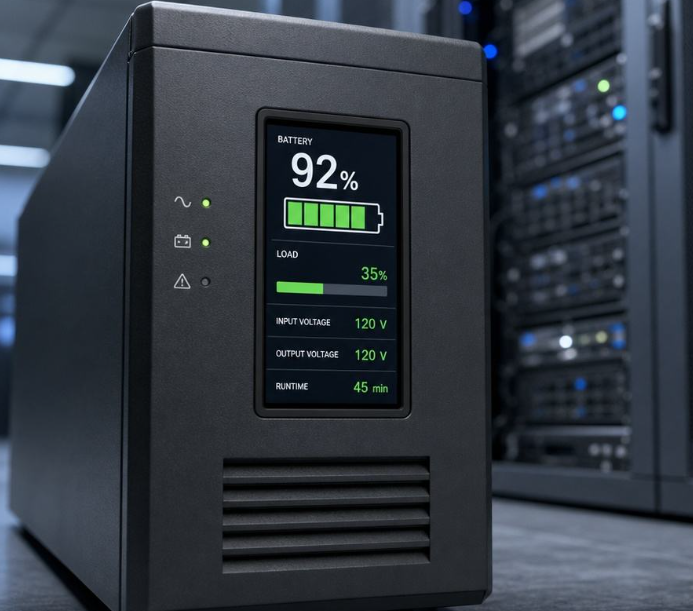
Depending on the application, an LCD may display:
- Management IP addresses
- Network link status
- Hardware alarms
- CPU and memory information
- Power supply conditions
- Configuration menus
- Diagnostic messages
The amount of displayed information directly influences interface requirements.
A small status screen that updates only when an alarm changes has different bandwidth requirements from a color graphical interface showing multiple continuously updated parameters.
Three Key Engineering Questions
Before selecting an interface, equipment designers should determine:
1. What display interfaces does the host processor support?
An MCU with SPI peripherals may not provide the parallel RGB or MIPI interface required by another display module.
2. How frequently must the screen update?
Static status information requires less display bandwidth than animated or frequently refreshed graphics.
3. Where will the graphical processing take place?
Some architectures require the host to generate image data, while others use a smart display controller to manage the graphical interface.
These decisions affect both hardware cost and software development.
2. SPI LCD Interface: Compact and MCU-Friendly
SPI stands for Serial Peripheral Interface.
It is a synchronous serial communication interface commonly used between microcontrollers and peripheral devices.
Small TFT LCD modules frequently incorporate controller ICs that accept SPI commands and pixel data.
How SPI LCD Modules Work
In a typical architecture:
Host MCU → SPI Bus → LCD Controller → TFT LCD Panel
The MCU sends initialization commands, display data, and updates to the LCD controller.
Depending on the controller, the display may have internal graphics memory that retains the image after the host completes an update.
Advantages of SPI LCD Modules
Simple hardware integration
SPI requires relatively few signal connections compared with parallel RGB interfaces.
Good MCU compatibility
Many embedded controllers provide one or more SPI peripherals.
Suitable for compact displays
Small 2.4-inch, 2.8-inch, and selected 3.5-inch displays are common candidates for SPI-based architectures.
Efficient for occasional updates
Static status messages, IP addresses, and alarm indicators generally do not need continuous full-screen refresh.
Limitations of SPI LCD Interfaces
The main limitation is communication bandwidth.
For example, consider a 320 × 240 pixel display using 16-bit color.
One complete frame contains:
320 × 240 × 16 = 1,228,800 bits
At a theoretical 40 MHz single-data-line SPI transfer rate, transmitting one frame would require approximately 30.7 milliseconds before protocol overhead, command transfers, memory limitations, or processing delays.
Actual refresh performance is lower and depends on the controller and system implementation.
This illustrates why SPI can be effective for status interfaces but may become limiting for more complex graphics.
When Should Network Equipment Use SPI?
SPI is often suitable for:
- Compact router status displays
- Basic server front panels
- Embedded monitoring controllers
- Small network diagnostic devices
- Simple graphical maintenance menus
For these applications, SPI offers a practical balance between hardware simplicity and display functionality.
3. UART Smart Displays: Simplifying GUI Integration
UART stands for Universal Asynchronous Receiver/Transmitter.
It is widely used for serial communication between embedded devices.
However, an important distinction must be made:
UART is not normally a direct pixel interface for a bare TFT LCD panel.
Instead, UART-based graphical displays typically include an additional controller that generates and manages the displayed interface.
How a UART Smart Display Works
A simplified architecture is:
Host MCU → UART Communication → Smart Display Controller → LCD Panel
The host sends commands or application data rather than continuously transferring the entire image.
For example, a network controller may send information indicating that a port is disconnected.
The smart display controller then updates the corresponding icon or text field according to its firmware and GUI configuration.
Advantages of UART Smart Displays
Reduced host graphics workload
A smart display can manage supported graphical elements using its own processing resources.
Simplified application communication
The host may only need to send parameter updates or predefined commands.
Useful for limited-resource MCUs
Applications without a dedicated graphics engine may benefit from this architecture.
Flexible HMI development
Depending on the platform, the display may support menus, buttons, status indicators, and graphical layouts.
Limitations of UART Smart Displays
UART-based display systems introduce additional considerations:
- Compatibility with the smart display command protocol
- Firmware and GUI development requirements
- Controller memory and performance limitations
- Additional electronics and component cost
- Long-term availability of the smart display platform
UART bandwidth also limits the amount of information that can be transferred.
At 115,200 baud using a conventional 8N1 serial format, the theoretical maximum application payload rate is approximately 11,520 bytes per second before protocol overhead.
This may be sufficient for status commands but unsuitable for frequent transfer of large images.
When Should Network Equipment Use UART?
UART smart displays may be appropriate for:
- Router configuration panels
- Industrial network controllers
- Intelligent rack management devices
- Compact embedded HMIs
- Equipment using MCUs without advanced graphics hardware
For an OEM developing a simple menu-based interface, a UART smart display may reduce host-side graphics development.
However, the complete engineering effort depends on the selected platform.
4. RGB LCD Interface: Direct Graphical Display Integration
A parallel RGB interface transfers pixel information from the host display controller to the LCD module.
It generally includes pixel data signals and timing signals such as pixel clock, horizontal synchronization, and vertical synchronization, depending on the implementation.
How an RGB TFT LCD Works
A typical architecture is:
Processor / LCD Controller → RGB Signals → TFT LCD Driver Electronics → LCD Panel
The host generates the image data and supplies the required timing.
Unlike many SPI LCD modules, a conventional RGB display architecture may require a continuous stream of pixel information.
Advantages of RGB LCD Interfaces
Supports graphical interfaces
RGB is suitable for applications requiring detailed menus, icons, and color graphics.
Direct integration with compatible processors
Many embedded processors provide LCD controllers designed for RGB interfaces.
Broad design flexibility
RGB can support multiple display sizes and resolutions when suitable host and panel combinations are selected.
Limitations of RGB Interfaces
Parallel RGB interfaces use more signal lines than SPI or UART.
This can increase:
- PCB routing complexity
- Connector pin count
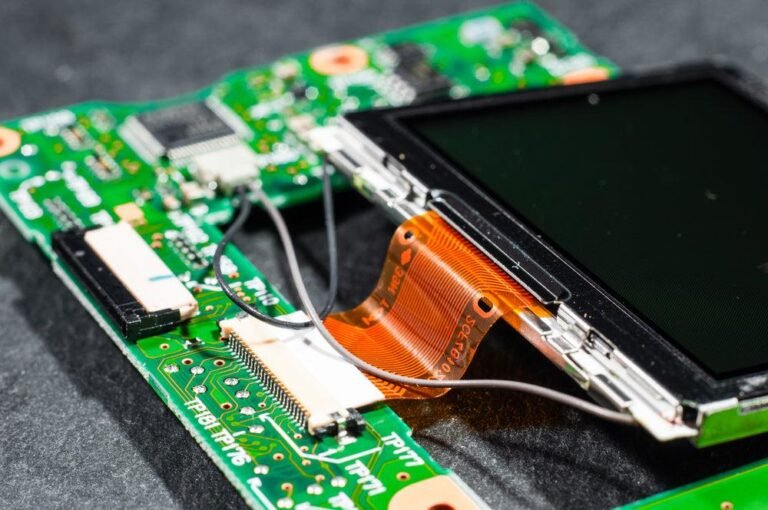
- FPC requirements
- Signal integrity considerations
- Electromagnetic emission management
RGB displays may also require a framebuffer or other graphics-generation resources in the host system.
When Should Network Equipment Use RGB?
RGB may be suitable for:
- Advanced network management panels
- Graphical server maintenance terminals
- Router HMIs
- Intelligent rack control equipment
- Larger embedded monitoring interfaces
For systems already equipped with a compatible graphical processor, RGB can provide a practical direct-display architecture.
5. SPI vs. UART vs. RGB: Technical Comparison
| Caractéristique | SPI LCD | UART Smart Display | RGB TFT LCD |
|---|---|---|---|
| Architecture | MCU to LCD controller | MCU to smart display controller | Processor to LCD timing interface |
| Signal count | Relatively low | Faible | Relatively high |
| Host graphics workload | Moderate to high | Often lower | Host-dependent, often substantial |
| Bandwidth | Limited by SPI implementation | Limited by UART link | High, with continuous pixel transfer |
| Typical UI | Status screens, simple graphics | Menus and control interfaces | Detailed graphical interfaces |
| Controller requirements | SPI-compatible controller | Smart display firmware | RGB-capable LCD controller |
| Design complexity | Usually moderate | Platform-dependent | Higher PCB and timing requirements |
| Typical application | Compact monitoring | Embedded HMI | Advanced graphical panel |
The best interface is the one that matches the system architecture, not necessarily the one with the highest theoretical bandwidth.
6. What About LVDS, MIPI DSI and RS485?
SPI, UART, and RGB are not the only interfaces used in industrial displays.
Depending on the equipment design, engineers may also consider LVDS, MIPI DSI, RS485, and other communication methods.
LVDS
LVDS uses differential signaling and is used in various industrial display architectures.
It can be useful for suitable graphical LCD systems where signal integrity and cable design are important.
MIPI DSI
MIPI DSI is a high-speed display interface commonly supported by modern embedded processors.
It may be suitable for compact graphical interfaces requiring efficient data transmission.
RS485
RS485 describes an electrical communication interface frequently used in industrial systems.
It does not directly replace an LCD pixel interface.
An RS485-based HMI typically includes a controller that interprets incoming data and generates the graphical display.
For equipment manufacturers, the correct interface selection depends on processor capabilities, communication distance, data requirements, and system architecture.
7. EMI/EMC Considerations for Network Equipment LCD Interfaces
Network devices frequently incorporate high-speed digital circuits, switching power supplies, and communication interfaces.
These components can create electromagnetic disturbances.
LCD interface integration must therefore consider signal routing, grounding, shielding, and power integrity.
SPI and UART
Low signal count can simplify cabling, but neither SPI nor UART is automatically immune to interference.
Clock frequency, cable length, voltage levels, return paths, and grounding influence system performance.
For longer connections, an appropriate differential or industrial communication architecture may be necessary.
RVB
Parallel RGB interfaces involve multiple signals operating with defined timing relationships.
Poor routing, long interconnections, and inadequate return paths can cause signal integrity or EMC problems.
Recommended Design Practices
For industrial LCD integration:
- Keep signal connections appropriate for the interface specification.
- Provide controlled return paths.
- Avoid routing sensitive signals close to major noise sources.
- Use suitable connector and cable structures.
- Evaluate power supply filtering.
- Validate operation under the complete equipment’s EMC requirements.
EMC compliance should be verified at the final system level.
8. Custom LCD Interface Solutions from QIHAN
Standard display modules may not perfectly match the electrical and mechanical requirements of server or network equipment.
QIHAN provides OEM/ODM industrial TFT LCD and display module customization services for embedded equipment manufacturers.
Its customization capabilities can support projects involving:
- Small-format TFT LCD selection
- SPI, RGB, LVDS, MIPI and MCU-compatible display solutions
- Custom FPC and connector configurations
- Intégration de la carte de commande
- Smart display architecture evaluation
- Intégration de panneaux tactiles
- Mechanical customization
For projects using UART or RS485, QIHAN can work with OEM engineering teams to evaluate suitable controller-based display configurations.
Assistance à l'intégration matérielle
Hardware integration should begin before the display design is finalized.
OEM teams should confirm:
- Available processor interfaces
- Display resolution and update requirements
- Signal voltage compatibility
- PCB and FPC constraints
- Firmware and driver requirements
- Power supply conditions
- Expected production lifecycle
By reviewing these details early, manufacturers can reduce interface incompatibility and unnecessary hardware revisions.
QIHAN also supports 5–10 year supply planning for industrial OEM display programs, subject to project-specific arrangements.
9. Frequently Asked Questions
Is SPI or UART better for a small TFT LCD?
SPI is often suitable when the host MCU directly controls a display controller and sends pixel data.
UART may be preferable when the project uses a smart display with its own graphics controller and command protocol.
The correct choice depends on the required UI functions and host resources.
Can a TFT LCD connect directly to UART?
Most bare TFT LCD panels cannot connect directly to UART.
A UART-compatible smart display requires additional control electronics and supporting firmware.
Is RGB faster than SPI for LCD displays?
Parallel RGB can support substantially higher continuous pixel data rates than many SPI implementations.
However, actual performance depends on the specific interface configuration, controller and display resolution.
Which LCD interface is suitable for network switches?
Small monitoring interfaces may use SPI or UART smart displays.
More complex graphical control panels may benefit from RGB, LVDS or MIPI DSI, depending on the host processor.
Can QIHAN customize LCD interfaces for OEM projects?
Yes. QIHAN offers display interface and FPC customization support for compatible industrial TFT LCD modules.
The final interface solution should be confirmed through engineering evaluation.
Conclusion
Choosing between SPI, UART, and RGB is primarily an architectural decision.
SPI is often suitable for compact displays with relatively simple graphics. UART smart displays can simplify certain command-driven HMI applications. RGB provides a direct path for more advanced graphical interfaces when supported by the host processor.
For network equipment OEMs, interface selection should also consider EMC, mechanical integration, software development, and component availability.
QIHAN helps embedded equipment manufacturers evaluate custom industrial LCD modules, interface configurations, and long-term production requirements.
Looking for a Compact LCD for Your Server Front Panel?
QIHAN offers customizable small-format industrial LCD modules for rack-mounted servers, network switches and embedded control equipment.
Whether your project requires an SPI TFT LCD, a compatible RGB module, or a UART smart display architecture, QIHAN can help evaluate an appropriate OEM/ODM solution.
Contact QIHAN to discuss your LCD interface requirements and request a custom quotation.
Site web : https://qihantech.com/
Related Reading: Server & Network Equipment LCD Display Selection Guide
 English
 Português
 Français
 Deutsch
 Español
 Русский