
Description du produit
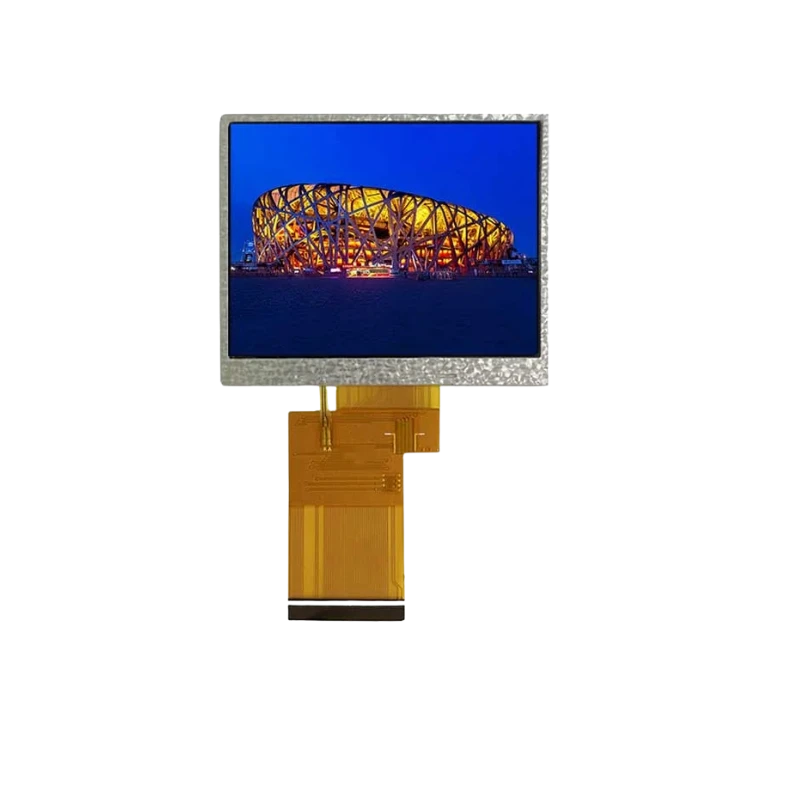
The QIHAN HQ035AIG0B00_211 is a high-performance 3.5 inch TFT LCD touch screen module designed for industrial control systems, smart devices, handheld equipment, and embedded HMI applications. Featuring a 320×240 resolution and IPS full viewing angle technology, this TFT display module delivers vivid colors, stable image quality, and excellent readability from all directions.
Built with the ST7272A driver IC and supporting a 24-bit RGB interface, the module ensures smooth image rendering and reliable display performance for embedded systems. The integrated projected capacitive touch screen (PCAP) supports 5-point touch functionality, providing responsive and intuitive user interaction for modern smart devices.
With 400 cd/m² brightness, an 800:1 contrast ratio, and wide operating temperature support from -30℃ to +85℃, this display module is suitable for demanding industrial and outdoor environments. Its compact structure and customizable touch solution make it ideal for industrial control panels, medical devices, security systems, and portable electronic equipment.
Points forts
- Écran tactile LCD TFT 3,5 pouces
- 320×240 Resolution
- Angle de vision complet IPS
- ST7272A Driver IC
- 24-Bit RGB Interface
- Projected Capacitive Touch Screen (PCAP)
- 5-Point Multi-Touch Support
- 400 cd/m² Brightness
- Rapport de contraste de 800:1
- Wide Temperature Operation
- Stable & Responsive Touch Performance
- Suitable for Industrial & Embedded Applications
Spécifications
| Article | Spécification |
|---|---|
| Numéro de modèle. | HQ035AIG0B00_211 |
| Taille d'affichage | 3,5 pouces |
| Résolution | 320 × 240 |
| Type d'écran LCD | TFT IPS |
| Couleur d'affichage | 65K couleurs |
| Luminosité | 300~400 cd/m² |
| Rapport de contraste | 800:1 |
| Direction de vision | Vue ALL |
| Interface | RVB |
| Driver IC | ST7272A |
| Touch Type | Projected Capacitive Touch (PCAP) |
| Touch Points | 5-Point Touch |
| Touch IC | ILI2130 |
| Tension de fonctionnement | 3.0V ~ 3.6V |
| Typical Voltage | 3,3 V |
| Format d'image | 4:3 |
| Température de fonctionnement | -30℃ ~ +85℃ |
| Température de stockage | -30℃ ~ +85℃ |
Application
- Systèmes de contrôle industriel
- Équipements médicaux
- Security Devices
- Smart Home Panels
- Instruments portables
- Systèmes IHM embarqués
- Appareils électroniques portables
- Équipements d'automatisation
- Appareils IoT
- Électronique grand public
FAQ
Q1: What resolution does the HQ035AIG0B00_211 support?
A: The display module supports a resolution of 320×240 pixels with clear and stable image quality.
Q2: Which interface does this TFT display support?
A: The module supports a 24-bit RGB interface for reliable and smooth display performance.
Q3: What type of touch technology is used?
A: The module integrates a projected capacitive touch screen (PCAP) with 5-point multi-touch support.
Q4: Which driver IC is used in this display?
A: The TFT LCD uses the ST7272A driver IC, while the touch panel uses the ILI2130 touch controller IC.
Q5: Does the display support wide viewing angles?
A: Yes. IPS technology provides 80° viewing angles in all directions for consistent image quality.
Q6: Is this display suitable for industrial environments?
A: Yes. The module supports a wide operating temperature range from -30℃ to +85℃, making it suitable for harsh industrial environments.
Q7: What applications is this display suitable for?
A: It is suitable for industrial control systems, medical devices, smart home panels, handheld equipment, and embedded HMI applications.
Q8 : QIHAN peut-il fournir des services de personnalisation ?
A: Yes. QIHAN supports customization including touch solutions, brightness adjustment, interface modification, FPC design, and structural optimization.